Talk to Legends & Lattes like its author wrote you back.
Get the ideas that fit your life — not generic summaries.
- Chat with the book
- Audiobook-style main ideas
- Adapts to your life and goals
- Helps you take action
What it argues
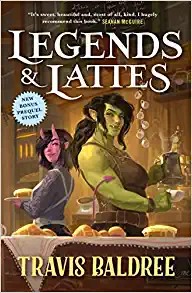
Viv is an orc barbarian who has spent decades killing things for coin. At the peak of her fighting career she decides she's done — she wants to open a coffee shop. Nobody in the city of Thune has ever heard of coffee, and the city doesn't especially want an orc running a business in its commercial district. Legends & Lattes is about what comes after the adventure: building something instead of destroying it, finding where you belong when you've spent your whole life in motion.
The book works less as a fantasy story and more as a slow domestic drama with fantasy furniture. The central tensions are mundane: will the shop survive? Will the regulars keep coming back? Will Viv let herself be loved by the people around her, or keep treating every relationship like a temporary bivouac? Baldree is less interested in plot twists than in the texture of daily routine — the smell of baking, the regulars who become fixtures, the found family that assembles itself around a warm room.
What it gets right
- 1.
The book insists that quitting an identity you've outgrown is an act of courage, not failure — Viv walking away from adventuring is treated as the bravest thing she does.
- 2.
Found family forms around shared space and repeated presence, not dramatic declarations. The regulars at the coffee shop become a family by showing up.
- 3.
The queer romance is notable for what it refuses to do: make queer identity a source of external conflict. It's simply there, central and undramatic.
What it covers
Who wrote it
Travis Baldree spent years as an audiobook narrator before writing Legends & Lattes, which began as a self-published project and became a sensation in the "cozy fantasy" movement before being picked up by Tor Books. The novel won the Alex Award and the Lodestar Award. His follow-up, Bookshops & Bonedust, is a prequel centered on a younger Viv. Baldree's background in narrating others' stories is visible in his prose — he's unusually good at pacing, voice, and small emotional beats.
