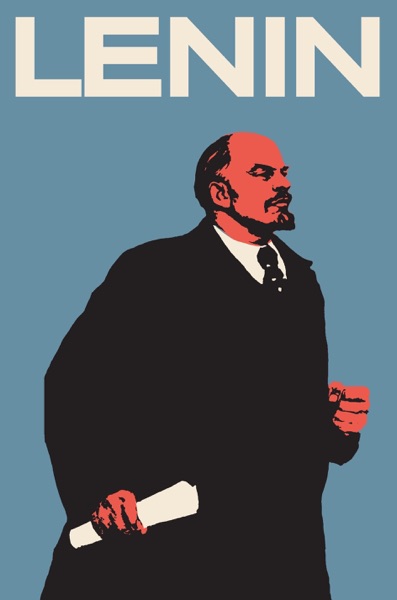
Talk to Lenin like its author wrote you back.
Get the ideas that fit your life — not generic summaries.
- Chat with the book
- Audiobook-style main ideas
- Adapts to your life and goals
- Helps you take action
What it argues
Victor Sebestyen's Lenin is a biography that aims to restore the man behind the mythology — both the Soviet mythology that made him a saint and the anti-communist one that made him a simple monster. Sebestyen draws on archives opened after the Soviet collapse to write a portrait of Lenin as a human being: obsessive, ruthless, brilliant, often mistaken, and capable of extraordinary cruelty when he believed the cause demanded it.
The book covers Lenin's full life from his middle-class upbringing in Simbirsk through his radicalization after his brother's execution, his years of exile in Western Europe, and the October 1917 seizure of power. Sebestyen is particularly good on the exile years, when Lenin lived for decades as a professional revolutionary in London, Geneva, Paris, and Zurich — arguing, writing, quarreling with other socialists, and waiting for the moment he believed would come. His relationship with Nadezhda Krupskaya, his wife and political partner, and his affair with Inessa Armand are handled with more nuance than most Lenin biographies attempt.
What it gets right
- 1.
Lenin's radicalization was triggered by his brother Alexander's execution for plotting to assassinate the Tsar — a biographical fact that shaped everything that followed.
- 2.
The exile years were not wasted time. Lenin spent decades building an international network, developing his theory of the vanguard party, and waiting for the right historical conditions.
- 3.
October 1917 was a coup as much as a revolution. Lenin moved against the Provisional Government at a moment of its maximum weakness, with a small, organized force and no popular mandate.
What it covers
Who wrote it
Victor Sebestyen is a British journalist and historian who spent twenty years as a foreign correspondent covering Eastern Europe, including the fall of communism in 1989. He is the author of Twelve Days, about the 1956 Hungarian Revolution, and Revolution 1989, a history of the collapse of the Soviet bloc. His books are known for synthesizing archival research with accessible narrative prose. He writes and broadcasts regularly for British and international outlets on European history and contemporary politics.
