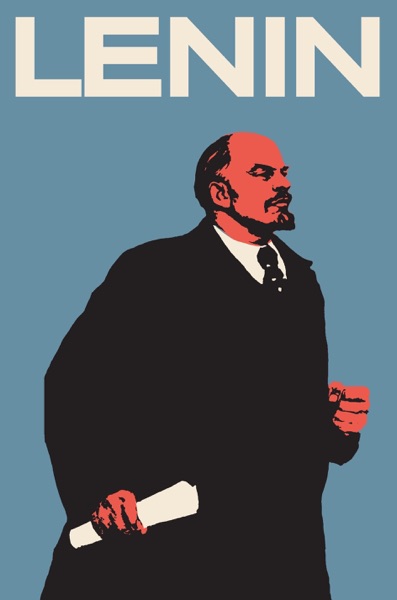
Lenin by Victor Sebestyen is a 2017 biography book about revolution, power, political ideology. Lenin's radicalization was triggered by his brother Alexander's execution for plotting to assassinate the Tsar — a biographical fact that shaped everything that followed.
Summary
Victor Sebestyen's Lenin is a biography that aims to restore the man behind the mythology — both the Soviet mythology that made him a saint and the anti-communist one that made him a simple monster. Sebestyen draws on archives opened after the Soviet collapse to write a portrait of Lenin as a human being: obsessive, ruthless, brilliant, often mistaken, and capable of extraordinary cruelty when he believed the cause demanded it.
The book covers Lenin's full life from his middle-class upbringing in Simbirsk through his radicalization after his brother's execution, his years of exile in Western Europe, and the October 1917 seizure of power. Sebestyen is particularly good on the exile years, when Lenin lived for decades as a professional revolutionary in London, Geneva, Paris, and Zurich — arguing, writing, quarreling with other socialists, and waiting for the moment he believed would come. His relationship with Nadezhda Krupskaya, his wife and political partner, and his affair with Inessa Armand are handled with more nuance than most Lenin biographies attempt.
Sebestyen's argument is that the Soviet Union's eventual character was not accidental. The repression, the secret police, the intolerance of dissent — these were not Stalinist distortions of Leninism but direct expressions of it. Lenin founded the Cheka, introduced mass terror as a deliberate policy tool, and concentrated power in a small party vanguard from the start. Stalin was in many ways Lenin's authentic heir. This is the most uncomfortable and most important claim in the book.
The narrative is fast-moving and readable without sacrificing depth. Sebestyen spent years as a foreign correspondent and it shows in the prose: clear, economical, built for readers who didn't previously know much about Lenin rather than for specialists. Those who want fuller treatment of Marxist theory or the internal debates of the Bolshevik movement may find the book too compressed, but as an introduction to Lenin and his legacy it's hard to beat.
Talk to Lenin like its author wrote you back.
Get the ideas that fit your life — not generic summaries.
- Chat with the book
- Audiobook-style main ideas
- Adapts to your life and goals
- Helps you take action
Key takeaways
- 1.
Lenin's radicalization was triggered by his brother Alexander's execution for plotting to assassinate the Tsar — a biographical fact that shaped everything that followed.
- 2.
The exile years were not wasted time. Lenin spent decades building an international network, developing his theory of the vanguard party, and waiting for the right historical conditions.
- 3.
October 1917 was a coup as much as a revolution. Lenin moved against the Provisional Government at a moment of its maximum weakness, with a small, organized force and no popular mandate.
- 4.
The repression that defined Soviet history began with Lenin, not Stalin. The Cheka, the Red Terror, and the concentration camps were all Leninist innovations.
- 5.
Lenin's model of the revolutionary vanguard — a small, disciplined party acting on behalf of a class that isn't yet ready to act for itself — has been replicated in revolutions and authoritarian movements ever since.
- 6.
His personal life was marked by extraordinary discipline and complete subordination of private feeling to political work, with the exception of his relationship with Inessa Armand.
- 7.
Lenin was wrong about many things: the timing of the revolution, the readiness of European workers to follow Russia, the viability of War Communism. He was flexible enough to recognize some mistakes and brutal enough to ignore others.
- 8.
The New Economic Policy, Lenin's partial retreat to market economics in 1921, suggests he could adapt when ideology collided with reality — but he never questioned the monopoly on political power.
Discussion questions
Use these on your own, with a book club, or as chat starters in Superbook. Book club version, ready to copy or print →
- 1.
Sebestyen argues that Stalinism was a direct extension of Leninism rather than a betrayal of it. Does the evidence in the book support that case?
- 2.
Lenin spent most of his adult life in exile, rarely among the workers he claimed to represent. How did that distance shape his politics and his vision of revolution?
- 3.
How much did personal biography — his brother's execution, his class background, his years of obscurity — determine Lenin's political development?
- 4.
The vanguard party model assumes that a small, educated elite can act on behalf of a class that lacks political consciousness. What are the risks embedded in that assumption?
- 5.
Krupskaya and Inessa Armand were both central to Lenin's life and both committed revolutionaries in their own right. How does Sebestyen handle their roles in the narrative?
- 6.
Lenin introduced mass terror as a deliberate policy tool. What justifications did he use, and how should we evaluate them from a distance of a century?
- 7.
October 1917 depended heavily on timing, contingency, and the weakness of alternatives. How much credit does Lenin personally deserve for the Bolshevik seizure of power?
- 8.
Lenin's New Economic Policy was a significant ideological concession. What does his willingness to make it tell us about his underlying priorities?
- 9.
Which aspects of Lenin's organizational methods — discipline, secrecy, intolerance of internal dissent — have appeared in political movements on both the left and right since 1917?
- 10.
Sebestyen writes Lenin as a human being rather than a symbol. Does that approach make him more sympathetic, more comprehensible, or neither?
- 11.
How do you evaluate a historical figure whose stated goals included human emancipation but whose methods produced mass suffering?
- 12.
What does Lenin's life suggest about the relationship between ideological conviction and political effectiveness?
Themes
Frequently asked questions
-
Is Sebestyen's Lenin suitable for readers new to Russian history?
Yes. It's written for general readers, not specialists, and Sebestyen provides enough context that you don't need prior knowledge of Marxist theory or Russian politics. The chronological structure makes it easy to follow.
-
How long does it take to read Lenin by Victor Sebestyen?
Around seven to eight hours. At 500 pages it's substantial, but the prose moves quickly. Readers interested in the period often finish faster than the page count suggests.
-
What is Sebestyen's central argument about Lenin?
That Lenin bears direct responsibility for the repressive character of Soviet rule — not just as a founder who was later betrayed, but as the architect of the secret police, mass terror, and one-party dictatorship. Stalin's crimes were continuous with, not departures from, Lenin's own methods.
-
How does this biography compare to Robert Service's Lenin?
Service's three-volume biography is more exhaustive and scholarly. Sebestyen's single-volume account is more readable and draws on newer archival material. They reach similar conclusions about Lenin's political legacy. Sebestyen is the better starting point; Service is for readers who want maximum depth.
-
Who should read this book?
Anyone interested in the origins of the Soviet state, the mechanics of revolution, or the relationship between ideology and political violence. It's also valuable for readers interested in political leadership more broadly, as Lenin's organizational methods have been widely imitated.
Similar books
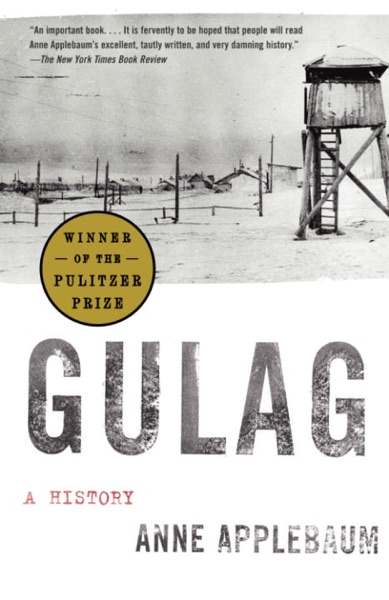
Gulag: A History
Anne Applebaum
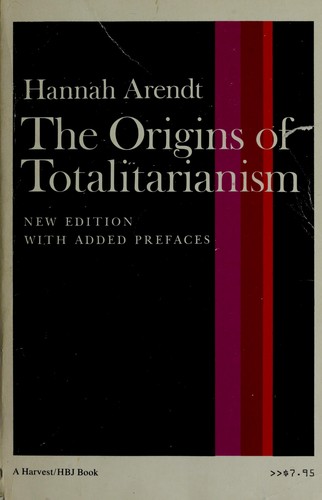
The Origins of Totalitarianism
Hannah Arendt
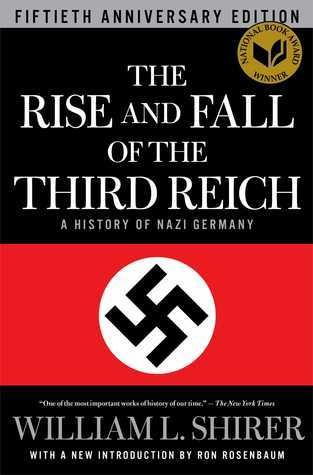
The Rise and Fall of the Third Reich
William L. Shirer
Citizens: A Chronicle of the French Revolution
Simon Schama
