Philosophy · Book club
Letters to a Young Poet book club questions
Here are 11 book club questions for Letters to a Young Poet by Rainer Maria Rilke, ordered to open easily and end somewhere worth arguing about. Copy them, print them, or bring them up one at a time.
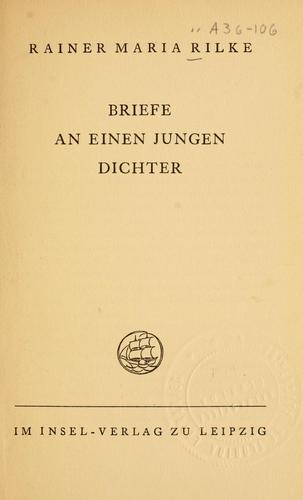
Letters to a Young Poet is a collection of ten letters Rilke wrote between 1903 and 1908 to Franz Xaver Kappus, a young military cadet and aspiring poet who had sent Rilke samples of his verse and asked for criticism.
Rainer Maria Rilke · 1929 · 1h 15m
Full summary and key takeaways →The 11 questions
- 1.
Rilke's test — would you die if you couldn't write? — is deliberately severe. Is that the right test, or does it exclude people who have a genuine creative life but not a compulsive one?
- 2.
He writes about solitude as a gift rather than a deprivation. What is your own relationship to being alone? Does it feel like nourishment or like something to escape?
- 3.
His advice to 'live your questions' is easy to quote and hard to practice. What is a question you are currently living rather than answering? Is that intentional?
- 4.
Rilke is skeptical of critics and literary fame as guides for whether to pursue art. What do you use as a guide for whether your work is worth continuing?
- 5.
The letters were written to a young man who was uncertain whether to pursue poetry or a military career. He chose the military. Does knowing the outcome change how you read the letters?
- 6.
His description of love — two solitudes that protect each other — is demanding. How does it compare to how love is described in the rest of the culture around you?
- 7.
Rilke writes as an older, established artist to a young uncertain one. Does the power asymmetry in the relationship affect how you trust the advice?
- 8.
The letters are deeply serious. Is there a thinker, mentor, or writer in your own life who takes your inner life with that kind of seriousness?
- 9.
He consistently deflects Kappus away from external validation. Is that healthy advice or does it risk producing a kind of artistic solipsism?
- 10.
These letters have been read and quoted for nearly a century outside their original context. Do they work as standalone philosophy, or do they require the context of a creative vocation to mean what Rilke intends?
- 11.
What is the most useful sentence in the letters for where you are right now in your work or life?
How to run the discussion
- Pick six to eight, not all of them. An hour of real discussion covers fewer questions than anyone expects, and racing the list is what makes a book club feel like homework.
- Open with what people noticed, not what they concluded. Asking for a verdict first hardens opinions before anyone has heard each other.
- Let the disagreement run. The questions below that split a room are the ones worth the time; the ones everyone answers the same way can be skipped.
- Ask the quiet person a specific question. A direct, narrow question is far easier to answer than an open invitation to contribute.
Themes worth steering toward
If the conversation stalls, these are the threads that usually restart it.
Common questions
What are good book club questions for Letters to a Young Poet?
Here are 11 book club questions for Letters to a Young Poet by Rainer Maria Rilke, ordered to open easily and end somewhere worth arguing about. The strongest openers ask what each reader noticed rather than what they concluded, and the discussion usually turns on creativity, solitude, artistic vocation.
How long should a book club discussion of Letters to a Young Poet last?
Most groups run 60 to 90 minutes of actual discussion. That is roughly six to eight questions, not all of them, so pick the ones that suit your group rather than working down the list in order.
What are the main themes in Letters to a Young Poet?
Creativity, Solitude, Artistic vocation, Inner life, Patience. Those are the threads most likely to divide a room, which makes them the useful places to steer a discussion that has gone quiet.
Picking the next one? See books like Letters to a Young Poet or questions for other book club picks.
