Philosophy · Book club
Leviathan book club questions
Here are 12 book club questions for Leviathan by Thomas Hobbes, ordered to open easily and end somewhere worth arguing about. Copy them, print them, or bring them up one at a time.
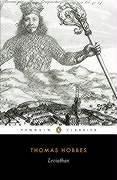
Leviathan, published in 1651 in the aftermath of the English Civil War, is one of the founding texts of modern political philosophy.
Thomas Hobbes · 1651 · 16h 45m
Full summary and key takeaways →The 12 questions
- 1.
Hobbes describes the state of nature as a thought experiment about what happens when authority breaks down. Can you think of historical or contemporary examples that support or challenge his picture?
- 2.
Hobbes argues any government is better than no government. Do you accept that as an absolute claim, or are there conditions under which the state of nature would be preferable?
- 3.
His model of human nature is self-interested throughout. Is that an accurate description of how people actually behave, or does it miss something important?
- 4.
Hobbes opposes divided sovereignty and checks on the monarch's power. How does that look in light of constitutional democracies — were the constitutionalists wrong, or does experience refute Hobbes?
- 5.
The one exception to obedience is self-preservation. How far does that exception extend? Does it justify resistance against systematic oppression?
- 6.
Hobbes says religious claims to authority over subjects must yield to the sovereign's commands. How do you think about the relationship between political and religious authority today?
- 7.
Leviathan was written during a civil war. How much of Hobbes's argument do you think is shaped by that specific historical context, and how much has permanent philosophical force?
- 8.
Hobbes thinks social order depends on coercive authority, not shared values or culture. Is he right that force is the foundation, or do you think norms and trust do more work than he acknowledges?
- 9.
What would Hobbes say about international relations — the space between states where there is no sovereign? Does his logic apply, and what follows from it?
- 10.
How does Hobbes's social contract differ from Rousseau's? What does the difference tell you about the different problems they were trying to solve?
- 11.
Hobbes was accused of atheism but insisted on his Christianity. Do you think his theology and his political theory are compatible, or does his materialism undercut his religious claims?
- 12.
Where in contemporary politics do you see Hobbesian logic — the argument that order requires concentrating power and limiting challenge to authority?
How to run the discussion
- Pick six to eight, not all of them. An hour of real discussion covers fewer questions than anyone expects, and racing the list is what makes a book club feel like homework.
- Open with what people noticed, not what they concluded. Asking for a verdict first hardens opinions before anyone has heard each other.
- Let the disagreement run. The questions below that split a room are the ones worth the time; the ones everyone answers the same way can be skipped.
- Ask the quiet person a specific question. A direct, narrow question is far easier to answer than an open invitation to contribute.
Themes worth steering toward
If the conversation stalls, these are the threads that usually restart it.
Common questions
What are good book club questions for Leviathan?
Here are 12 book club questions for Leviathan by Thomas Hobbes, ordered to open easily and end somewhere worth arguing about. The strongest openers ask what each reader noticed rather than what they concluded, and the discussion usually turns on political authority, social contract, human nature.
How long should a book club discussion of Leviathan last?
Most groups run 60 to 90 minutes of actual discussion. That is roughly six to eight questions, not all of them, so pick the ones that suit your group rather than working down the list in order.
What are the main themes in Leviathan?
Political authority, Social contract, Human nature, Sovereignty, War and peace. Those are the threads most likely to divide a room, which makes them the useful places to steer a discussion that has gone quiet.
Picking the next one? See books like Leviathan or questions for other book club picks.
