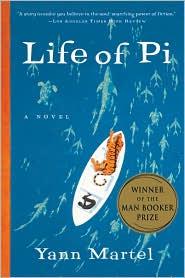
Talk to Life of Pi like its author wrote you back.
Get the ideas that fit your life — not generic summaries.
- Chat with the book
- Audiobook-style main ideas
- Adapts to your life and goals
- Helps you take action
What it argues
Life of Pi opens in Pondicherry, India, where Pi Patel grows up as the son of a zookeeper, accumulating an unorthodox religious education — he practices Hinduism, Christianity, and Islam simultaneously, to the bafflement of the adults around him. When his family decides to emigrate to Canada, they load their zoo animals onto a Japanese cargo ship. The ship sinks in the Pacific. Pi survives — in a lifeboat with a Bengal tiger named Richard Parker.
The core of the novel is the 227 days Pi spends adrift with the tiger. Martel is not primarily interested in adventure-story survival mechanics, though he handles those well. He is interested in what faith, fear, and stories do to human beings under extremity. Pi's relationships with his three religions, with the tiger, and with the ocean all become lenses for the same question: how do we make meaning when the world offers none? Richard Parker is never tamed — he remains a credible, lethal animal throughout — and that factual groundedness keeps the novel from becoming merely allegorical.
What it gets right
- 1.
Pi's simultaneous practice of three religions is not naivety but a genuine argument: if God is real, then the different names and rituals are just different doors into the same house.
- 2.
Richard Parker survives because Pi needs a reason to stay alive. The tiger's danger is also the tiger's purpose — caring for him structures Pi's days and keeps despair at bay.
- 3.
The novel's treatment of animals challenges the easy distinction between wild and domesticated, human and beast. Pi's zoo knowledge undercuts the idea that nature is simply freedom.
What it covers
Who wrote it
Yann Martel is a Spanish-born Canadian novelist best known for Life of Pi, which won the Man Booker Prize in 2002 and has sold more than fifteen million copies worldwide. He studied philosophy at Trent University and worked a variety of jobs before writing full-time. His other novels include Self, Beatrice and Virgil, and The High Mountains of Portugal. He also wrote 101 Letters to a Prime Minister, a collection of correspondence with Canada's Stephen Harper in which he sent a book every two weeks with an accompanying letter. He lives in Saskatchewan.
