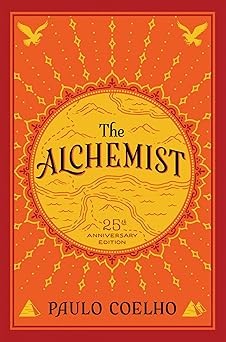
Life of Pi by Yann Martel is a 2001 literary fiction book about faith and doubt, survival, storytelling. Pi's simultaneous practice of three religions is not naivety but a genuine argument: if God is real, then the different names and rituals are just different doors into the same house.
Summary
Life of Pi opens in Pondicherry, India, where Pi Patel grows up as the son of a zookeeper, accumulating an unorthodox religious education — he practices Hinduism, Christianity, and Islam simultaneously, to the bafflement of the adults around him. When his family decides to emigrate to Canada, they load their zoo animals onto a Japanese cargo ship. The ship sinks in the Pacific. Pi survives — in a lifeboat with a Bengal tiger named Richard Parker.
The core of the novel is the 227 days Pi spends adrift with the tiger. Martel is not primarily interested in adventure-story survival mechanics, though he handles those well. He is interested in what faith, fear, and stories do to human beings under extremity. Pi's relationships with his three religions, with the tiger, and with the ocean all become lenses for the same question: how do we make meaning when the world offers none? Richard Parker is never tamed — he remains a credible, lethal animal throughout — and that factual groundedness keeps the novel from becoming merely allegorical.
The structure is quietly radical. The novel is framed by an author figure who claims to have heard Pi's story years later and to have found in it proof of God's existence — a setup that keeps you reading for the final scenes, in which a Japanese insurance investigation confronts Pi with an alternative version of events. That ending divides readers and is the source of most of the book's real power: Martel refuses to adjudicate between a beautiful story and a brutal one, and asks which one you would choose to believe.
Readers who love the book tend to engage with its theology — the idea that fiction can be a form of faith, that the stories we prefer say something about who we are. Readers who bounce off it often find the middle section's oceanic ecology overdone, or feel manipulated by the ending's pivot. The comparison point is not other survival narratives but other meditations on belief: The Alchemist for warmth, The Castle for theological anxiety without resolution.
Talk to Life of Pi like its author wrote you back.
Get the ideas that fit your life — not generic summaries.
- Chat with the book
- Audiobook-style main ideas
- Adapts to your life and goals
- Helps you take action
Key takeaways
- 1.
Pi's simultaneous practice of three religions is not naivety but a genuine argument: if God is real, then the different names and rituals are just different doors into the same house.
- 2.
Richard Parker survives because Pi needs a reason to stay alive. The tiger's danger is also the tiger's purpose — caring for him structures Pi's days and keeps despair at bay.
- 3.
The novel's treatment of animals challenges the easy distinction between wild and domesticated, human and beast. Pi's zoo knowledge undercuts the idea that nature is simply freedom.
- 4.
The final chapters present two versions of the same events. Martel doesn't tell you which is true. He asks which one you choose — and treats that choice as a kind of self-revelation.
- 5.
Suffering in the novel is not redemptive or punishing — it is simply immense. Pi's endurance is not heroic in any conventional sense; it is closer to the persistence of any living creature.
- 6.
Storytelling is itself a survival mechanism. Pi's habit of narrating his own situation — to himself, to Richard Parker, to the implied audience — is what keeps him human.
- 7.
The novel argues that reason and faith are not opposites but different approaches to the same uncertainty. Pi is drawn to religion not despite his curiosity but because of it.
- 8.
The ending's ambiguity is the point: the novel is asking you to examine not what happened but what a person needs to believe in order to survive — and what that need reveals.
Discussion questions
Use these on your own, with a book club, or as chat starters in Superbook. Book club version, ready to copy or print →
- 1.
Pi practices three religions at once, and the adults find this absurd. Do you think the novel presents his multi-faith as childish, wise, or something more ambiguous?
- 2.
Richard Parker never becomes friendly. The novel insists on his lethality throughout. How does that affect your reading of their relationship?
- 3.
The novel offers two versions of Pi's survival story. Which one did you believe, and did that change after you finished the book?
- 4.
Pi's father is a committed rationalist who thinks the zoo teaches children the truth about animals. His mother is more open to belief. Whose worldview does the novel ultimately favor — or does it refuse to choose?
- 5.
Martel's framing device — the author who finds in Pi's story 'proof of God's existence' — is either a deeply sincere religious claim or a provocation. Which did you read it as?
- 6.
The ocean sections are long, detailed, and sometimes tedious. Is that a structural flaw, or is the tedium part of what the novel is doing?
- 7.
How does Pi's zoo upbringing shape how he handles the lifeboat? Would someone without that education have survived in the same situation?
- 8.
Pi says a story with God is the better story. But is 'better' a reason to believe something? What is he actually claiming?
- 9.
The Japanese investigators reject Pi's animal story but can't disprove it. What does the novel say about the relationship between plausibility and truth?
- 10.
Compared to The Alchemist, which also wraps philosophical ideas about meaning into a quest narrative, where does Life of Pi land differently — and which do you find more honest?
- 11.
The Bengal tiger is named Richard Parker due to a clerical mix-up. Does the human name affect how you read the animal?
- 12.
By the end, Pi is a university student in Canada with a wife and children. How does knowing the ending from the framing device change how you read the survival sections?
Themes
Frequently asked questions
-
Is Life of Pi worth reading?
Yes, if you are willing to engage with its theological argument rather than just its plot. The survival story is genuinely gripping, but the novel's real ambition — to make a case for fiction as a form of faith — is what stays with readers. If allegory feels like a betrayal of realism, you may find the ending evasive.
-
What is Life of Pi actually about, without spoilers?
A teenager survives a shipwreck and spends months adrift in the Pacific in a lifeboat with a Bengal tiger. The novel uses that premise to explore faith, survival, and the stories human beings tell to make suffering bearable.
-
Is the tiger real in Life of Pi?
The novel deliberately leaves this open. The final chapters provide an alternative explanation. Most readers understand this as a deliberate ambiguity rather than a hidden answer, and the point is your response to that ambiguity — not the answer itself.
-
Is Life of Pi hard to read?
The middle section, adrift in the Pacific, is the most demanding — it is long and deliberately monotonous in places. The framing story and final act are fast. The prose is clear throughout; the difficulty is patience with the central stretch.
-
Who shouldn't read Life of Pi?
Readers who find religious or spiritual framing in fiction irritating rather than interesting. Also readers who prefer their endings to resolve: the novel's final move is to refuse resolution, and if that feels like a cheat, the whole book collapses.
-
Is there a movie adaptation of Life of Pi?
Yes. Ang Lee directed a 2012 film adaptation that won four Academy Awards including Best Director. It handles the visual spectacle of the ocean sequences well but necessarily flattens the novel's philosophical texture. Worth watching as a companion, not a substitute.