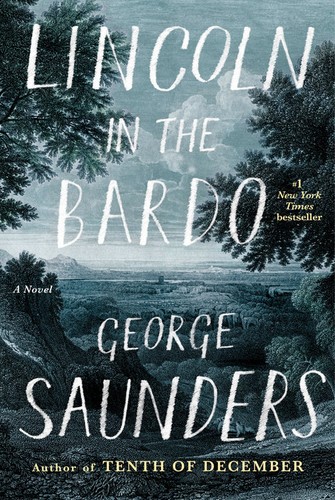
Talk to Lincoln in the Bardo like its author wrote you back.
Get the ideas that fit your life — not generic summaries.
- Chat with the book
- Audiobook-style main ideas
- Adapts to your life and goals
- Helps you take action
Lincoln in the Bardo, in detail
Lincoln in the Bardo takes place over a single night in February 1862, when President Abraham Lincoln visits the crypt where his eleven-year-old son Willie has just been buried. The "bardo" of the title is the Tibetan Buddhist concept of an intermediate state between death and rebirth, and Saunders populates it with the ghosts of the dead who occupy Oak Hill Cemetery in Georgetown — souls who have not yet accepted that they are dead, clinging to their former lives with increasingly baroque self-deceptions. Into this congregation of the unquiet dead comes the grief of a father who cannot bring himself to leave his son.
The novel is structured in hundreds of short sections, alternating between the voices of three main ghost narrators — Hans Vollman, Roger Bevins III, and the Reverend Everly Thomas — and passages of historical quotation assembled from real and invented sources about Lincoln's life, the party he held the night Willie fell ill, and the war consuming the country. The form is deliberately disorienting, especially at first: you are reading a crowd of voices interrupting each other, providing commentary on events, disagreeing about what they saw. It reads less like a novel than like the transcription of a haunting.
The structural weirdness is not a gimmick. Saunders uses it to argue something about how history is assembled — from competing accounts, selective memories, and the testimony of unreliable observers — and something about the nature of grief, which is also collective, also a babel of competing claims on the dead. The book won the Man Booker Prize in 2017 and generated some of the most divided reviews of any prize-winning novel in recent memory: some critics found it a masterpiece; others found the formal experimentation ultimately exhausting.
It is genuinely hard to read. The first fifty pages are the most disorienting, and readers who power through them are rewarded with one of the most emotionally overwhelming set pieces in recent fiction: Lincoln holding his dead son's body in the crypt while the ghosts, experiencing his grief through his skin, begin to understand something about acceptance. Those who bounce off the form in the first act will not recover their footing later. But for readers willing to meet Saunders on his own terms, this is a book unlike anything else.
The big ideas
- 1.
The bardo's ghosts cling to life through elaborate self-deception — Vollman believes he is in a 'sick box,' Bevins that he is simply ill. The novel uses this to examine how long we deny what we already know.
- 2.
Lincoln's grief is amplified and contextualized by the mass grief of the Civil War, which the novel insists he must hold simultaneously with his private loss.
- 3.
The historical pastiche sections undercut the idea of a single authoritative account of Lincoln — every source contradicts every other, and the 'real' Lincoln emerges from the aggregate noise.
