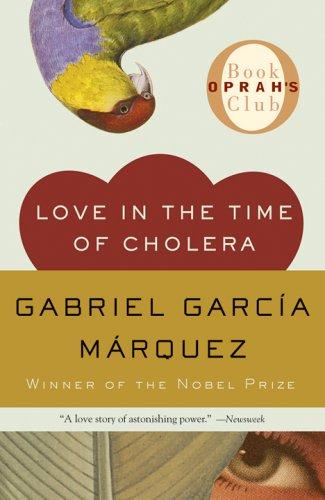
Talk to Love in the Time of Cholera like its author wrote you back.
Get the ideas that fit your life — not generic summaries.
- Chat with the book
- Audiobook-style main ideas
- Adapts to your life and goals
- Helps you take action
What it argues
Love in the Time of Cholera begins with the death of Dr. Juvenal Urbino, a distinguished physician in a Caribbean port city in the early twentieth century. At his funeral, Florentino Ariza — now an elderly river-company executive — approaches the widow Fermina Daza and tells her he has waited fifty-three years, seven months, and eleven days for this moment to revive his declaration of love. Fermina, who rejected him for Urbino half a century ago, sends him away in contempt. The novel then moves backward to their youthful romance and the long arc of both their lives — Florentino's decades of waiting, his hundreds of transient affairs, and the marriage between Fermina and Urbino that was complicated, durable, and quietly profound.
The novel is a book about love in all its forms simultaneously: the romantic obsession of youth, the slow-accumulated intimacy of a long marriage, the erotic hunger of the aging body, the self-deception that sustains longing across decades. García Márquez treats Florentino's fifty-three-year vigil as both romantic devotion and pathology, and he refuses to resolve that ambiguity simply. Urbino's marriage to Fermina is presented with equal complexity — not passion but a kind of love that builds through habit, irritation, and profound mutual knowledge.
What it gets right
- 1.
Florentino's obsession with Fermina is simultaneously the most romantic thing in the novel and a kind of refusal to live. The hundreds of affairs he has while 'waiting' complicate the devotion he claims to feel.
- 2.
The Urbino-Fermina marriage is the novel's counter-argument to romantic love: less exciting, more true, built on decades of friction and accommodation that produces something deeper than passion.
- 3.
García Márquez treats aging desire without apology. Florentino's seventy-year-old body still wants; the novel refuses to treat this as comic or pathetic.
What it covers
Who wrote it
Gabriel García Márquez (1927–2014) was a Colombian novelist, journalist, and Nobel laureate whose work defined magical realism as a global literary mode. Love in the Time of Cholera, published in 1985, was his first major novel after One Hundred Years of Solitude and drew on his parents' courtship for its emotional core. His other major works include Chronicle of a Death Foretold, The Autumn of the Patriarch, No One Writes to the Colonel, and his memoir Living to Tell the Tale. He spent much of his life in Mexico City and Barcelona and was a close friend of Fidel Castro.
