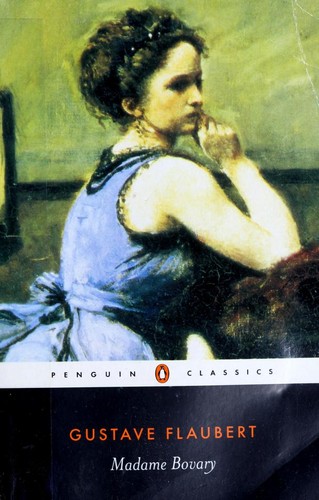
Talk to Madame Bovary like its author wrote you back.
Get the ideas that fit your life — not generic summaries.
- Chat with the book
- Audiobook-style main ideas
- Adapts to your life and goals
- Helps you take action
Madame Bovary, in detail
Emma Bovary is a doctor's wife in provincial Normandy who believes, with absolute conviction, that real life should feel like the romantic novels she devoured as a girl. Her husband Charles is kind, dull, and utterly incapable of meeting the emotional and aesthetic appetites she has cultivated. Over the course of the novel she pursues two affairs, accumulates ruinous debts buying the life she imagined, and ends in catastrophe. Flaubert tells this story with a precision so cold and precise that it became the founding document of literary realism.
The novel is simultaneously a portrait of Emma and a dissection of an entire social world. Flaubert despised provincial bourgeois life — its complacency, its clichés, its smug self-satisfaction — and he puts that contempt into the prose itself. The famous style indirect libre (free indirect discourse) means we are constantly inside Emma's overheated consciousness and simultaneously outside it, watching her romanticize and deceive herself. This technique is Flaubert's most lasting formal contribution: the gap between how Emma experiences things and how the narrator renders them is where the novel lives.
What makes Madame Bovary endure is that Emma is not simply a fool. Her desires — for beauty, intensity, meaning — are legitimate. The world she inhabits genuinely is small and dead, and Charles genuinely is limited. Flaubert refuses to let her off the hook for her choices, but he also refuses to let the world off the hook for the conditions it imposes on women of her time. The result is a book that readers keep arguing about: is Emma a victim, a narcissist, a Romantic, an avatar of something permanent about human longing?
The novel is slow by modern standards, and Flaubert's contempt for virtually every character (including Emma) can feel relentless. The Homais scenes — Charles's pharmacist neighbor, the embodiment of provincial self-satisfaction — are satirically brilliant but can feel like punishment. Readers who want a protagonist they can root for will struggle. But for those who find the cold eye itself compelling, Madame Bovary is one of the most technically accomplished novels ever written.
The big ideas
- 1.
Free indirect discourse — the technique of narrating in third person while inhabiting the character's inner voice — originated here in its fully developed form and changed the course of the novel.
- 2.
Emma Bovary was shaped by romantic fiction, and the novel is partly a critique of what reading certain kinds of fiction does to readers — a recursive joke that still cuts.
- 3.
Flaubert's famous remark 'Madame Bovary, c'est moi' points at something real: Emma's craving for an ideal impossible world is Flaubert's own aesthetic craving turned inside out.
