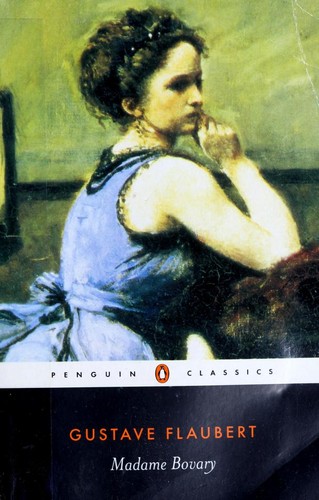
Madame Bovary by Gustave Flaubert is a 1857 classics book about romantic illusion vs. reality, bourgeois mediocrity, female desire and constraint. Free indirect discourse — the technique of narrating in third person while inhabiting the character's inner voice — originated here in its fully developed form and changed the course of the novel.
Summary
Emma Bovary is a doctor's wife in provincial Normandy who believes, with absolute conviction, that real life should feel like the romantic novels she devoured as a girl. Her husband Charles is kind, dull, and utterly incapable of meeting the emotional and aesthetic appetites she has cultivated. Over the course of the novel she pursues two affairs, accumulates ruinous debts buying the life she imagined, and ends in catastrophe. Flaubert tells this story with a precision so cold and precise that it became the founding document of literary realism.
The novel is simultaneously a portrait of Emma and a dissection of an entire social world. Flaubert despised provincial bourgeois life — its complacency, its clichés, its smug self-satisfaction — and he puts that contempt into the prose itself. The famous style indirect libre (free indirect discourse) means we are constantly inside Emma's overheated consciousness and simultaneously outside it, watching her romanticize and deceive herself. This technique is Flaubert's most lasting formal contribution: the gap between how Emma experiences things and how the narrator renders them is where the novel lives.
What makes Madame Bovary endure is that Emma is not simply a fool. Her desires — for beauty, intensity, meaning — are legitimate. The world she inhabits genuinely is small and dead, and Charles genuinely is limited. Flaubert refuses to let her off the hook for her choices, but he also refuses to let the world off the hook for the conditions it imposes on women of her time. The result is a book that readers keep arguing about: is Emma a victim, a narcissist, a Romantic, an avatar of something permanent about human longing?
The novel is slow by modern standards, and Flaubert's contempt for virtually every character (including Emma) can feel relentless. The Homais scenes — Charles's pharmacist neighbor, the embodiment of provincial self-satisfaction — are satirically brilliant but can feel like punishment. Readers who want a protagonist they can root for will struggle. But for those who find the cold eye itself compelling, Madame Bovary is one of the most technically accomplished novels ever written.
Talk to Madame Bovary like its author wrote you back.
Get the ideas that fit your life — not generic summaries.
- Chat with the book
- Audiobook-style main ideas
- Adapts to your life and goals
- Helps you take action
Key takeaways
- 1.
Free indirect discourse — the technique of narrating in third person while inhabiting the character's inner voice — originated here in its fully developed form and changed the course of the novel.
- 2.
Emma Bovary was shaped by romantic fiction, and the novel is partly a critique of what reading certain kinds of fiction does to readers — a recursive joke that still cuts.
- 3.
Flaubert's famous remark 'Madame Bovary, c'est moi' points at something real: Emma's craving for an ideal impossible world is Flaubert's own aesthetic craving turned inside out.
- 4.
The novel refuses to settle whether Emma is sympathetic or contemptible, and the discomfort of that refusal is part of its point. Readers who demand one or the other miss the book.
- 5.
Debt is the novel's structural engine: Emma's financial accumulation mirrors her emotional escalation, and the crash is both material and psychological.
- 6.
Homais, the pharmacist who prospers while everyone around him suffers, is Flaubert's most savage creation — complacency and self-promotion rewarded by the universe, which is a more depressing outcome than villainy would be.
- 7.
The provincial world of the novel is not just backdrop; it is a character — and its deadness is presented as a real constraint on Emma, not just a projection of her romanticism.
- 8.
Flaubert spent five years writing Madame Bovary, agonizing over individual sentences. The compression of feeling into style is the book's defining achievement: it does not tell you how to feel; it arranges language until you feel it.
Discussion questions
Use these on your own, with a book club, or as chat starters in Superbook. Book club version, ready to copy or print →
- 1.
Is Emma Bovary a sympathetic character? Did your answer shift over the course of the novel?
- 2.
Flaubert said 'Madame Bovary, c'est moi.' What did he mean, and do you see the author's desires reflected in Emma's — even though he seems to judge her so harshly?
- 3.
The novel was prosecuted for obscenity in 1857. What do you think genuinely disturbed its contemporary readers — was it the adultery, or something deeper about what it said about their world?
- 4.
Charles Bovary is devoted, decent, and incapable. Is he a victim of Emma's narcissism, or does the novel suggest his limitations are their own kind of violence?
- 5.
Homais is rewarded with the Légion d'honneur at the novel's end. What is Flaubert saying with that closing detail?
- 6.
Emma reads romantic novels and mistakes their fantasies for life. Does the novel suggest this is her personal failing, or an indictment of a certain kind of reading — and by extension, does it implicate you as a reader?
- 7.
The free indirect discourse means we're always both inside and outside Emma's consciousness. When did that double vision feel most uncomfortable to you?
- 8.
Rodolphe seduces Emma using clichés he consciously deploys. She is moved by them despite — or because of — being intelligent. What does that say about the power of romantic language?
- 9.
Can a woman reading Madame Bovary today have a fundamentally different experience of it than a man? Should she?
- 10.
Léon and Rodolphe both abandon Emma when her demands become inconvenient. Is this the novel's most realistic element?
- 11.
Flaubert apparently felt contempt for every character in the book. Does that contempt limit the novel's humanity, or is it part of its honesty?
- 12.
Compare Emma's fate to that of Anna Karenina (if you've read it). Which character earns more of your sympathy, and why?
Themes
Frequently asked questions
-
Is Madame Bovary worth reading?
Yes, though it is not a comfortable read. If you want to understand why the modern novel looks the way it does, this is one of a handful of essential texts. The technical achievement is enormous, and the portrait of self-deception remains exact after 170 years.
-
Is Madame Bovary hard to read?
Not linguistically, but emotionally and formally. In English translation it reads smoothly. The challenge is that Flaubert gives you no character to fully root for, and the free indirect discourse requires you to hold two perspectives at once. Some readers find this alienating; others find it the most sophisticated thing fiction can do.
-
What is Madame Bovary actually about?
A woman who mistakes romantic fantasy for a template for life, pursues it through affairs and debt, and is destroyed by the gap between her desires and reality. But it's also about the provincial world that constrained women of her era, the seductions of bad fiction, and Flaubert's own ambivalence about beauty and idealism.
-
Why was Madame Bovary put on trial?
It was prosecuted for 'offenses against public morality and religion' in 1857. The prosecution objected to Emma's adultery being depicted without clear moral punishment — they wanted the novel to condemn her more explicitly. Flaubert was acquitted, and the trial made the novel famous.
-
Who shouldn't read Madame Bovary?
Readers who need a protagonist they can root for, or who find ironic distance in narrators alienating, will have a hard time. The novel also punishes everyone, including Emma, without offering catharsis. If you read fiction primarily for emotional warmth or moral uplift, this is likely the wrong book.