Self-help · Book club
Making and Breaking the Grid book club questions
Here are 11 book club questions for Making and Breaking the Grid by Timothy Samara, ordered to open easily and end somewhere worth arguing about. Copy them, print them, or bring them up one at a time.
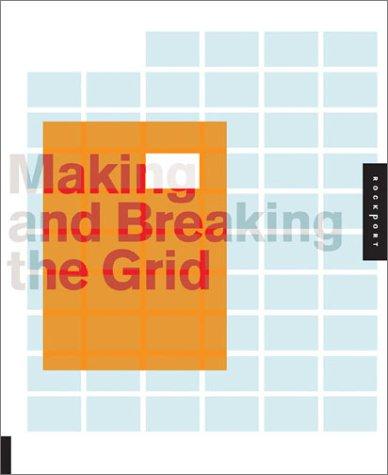
Making and Breaking the Grid is a textbook for graphic designers that does something most design textbooks avoid: it teaches both halves of its title with equal seriousness.
Timothy Samara · 2002 · 3h 20m
Full summary and key takeaways →The 11 questions
- 1.
Samara argues that breaking a grid only works when you understand the grid first. Do you agree, or are there creative breakthroughs that came from working without that foundation?
- 2.
The Swiss International Style treated grid-based design as morally serious — about universality and rationality. Is that a claim you find compelling, or does it feel like an ideological overreach?
- 3.
How much of contemporary digital design — apps, websites, social media — is actually grid-based? Where do you see the grid clearly, and where does it seem to have broken down?
- 4.
The book covers both print and screen examples. How much does the shift from physical to digital layout change the logic of the grid?
- 5.
Think of a piece of design you find particularly well-organized. Can you identify what structural system it uses? What would happen to the design if that structure were removed?
- 6.
Samara traces the grid back to medieval manuscripts. What does that long history suggest about the relationship between visual order and human cognition?
- 7.
What is the difference between a grid that constrains a designer and one that liberates them? How do you know which you're working with?
- 8.
The book treats grid-breaking as a category of intentional design decision. Have you seen work that presents randomness or irregularity as expressive when it seems actually uncontrolled?
- 9.
How do you balance the desire for visual consistency (served by grids) with the need for visual interest (sometimes served by breaking them)?
- 10.
Samara's book is itself an example of grid-based design. How does the layout of the book itself demonstrate or illustrate its arguments?
- 11.
If you were to redesign a familiar publication or website using a different grid type from the one it currently uses, how do you think the experience of reading it would change?
How to run the discussion
- Pick six to eight, not all of them. An hour of real discussion covers fewer questions than anyone expects, and racing the list is what makes a book club feel like homework.
- Open with what people noticed, not what they concluded. Asking for a verdict first hardens opinions before anyone has heard each other.
- Let the disagreement run. The questions below that split a room are the ones worth the time; the ones everyone answers the same way can be skipped.
- Ask the quiet person a specific question. A direct, narrow question is far easier to answer than an open invitation to contribute.
Themes worth steering toward
If the conversation stalls, these are the threads that usually restart it.
Common questions
What are good book club questions for Making and Breaking the Grid?
Here are 11 book club questions for Making and Breaking the Grid by Timothy Samara, ordered to open easily and end somewhere worth arguing about. The strongest openers ask what each reader noticed rather than what they concluded, and the discussion usually turns on grid systems, graphic design, layout.
How long should a book club discussion of Making and Breaking the Grid last?
Most groups run 60 to 90 minutes of actual discussion. That is roughly six to eight questions, not all of them, so pick the ones that suit your group rather than working down the list in order.
What are the main themes in Making and Breaking the Grid?
Grid systems, Graphic design, Layout, Typography, Visual composition. Those are the threads most likely to divide a room, which makes them the useful places to steer a discussion that has gone quiet.
Picking the next one? See books like Making and Breaking the Grid or questions for other book club picks.
