Talk to Making Movies like its author wrote you back.
Get the ideas that fit your life — not generic summaries.
- Chat with the book
- Audiobook-style main ideas
- Adapts to your life and goals
- Helps you take action
What it argues
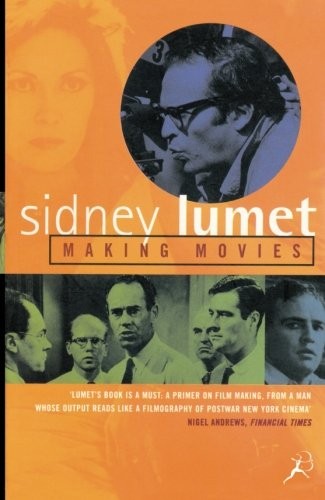
Making Movies is Sidney Lumet's account of how films get made, written by a director who spent fifty years making them. It is not a memoir or a theory of cinema — it is a practical examination of the decisions that shape a movie, told from inside the process by someone who made Network, Dog Day Afternoon, 12 Angry Men, Serpico, and before the book was published, thirty-odd more. Lumet was not interested in auteur theory. What he cared about was whether the work was honest.
The book moves through the filmmaking process roughly in order: the script, the style, working with actors, the camera, the editor. But Lumet's organizing principle is not procedure — it is the question of what every decision is in service of. He calls this the "why" of every choice, and his consistent argument is that style should grow from content rather than be imposed on it. His chapter on choosing the visual style of a film is among the clearest accounts of how directors translate emotional intent into camera language that exists in print.
What it gets right
- 1.
Every stylistic decision in a film should grow from the material — the story, its themes, its emotional core. Style imposed from outside the story produces work that is decorative rather than expressive.
- 2.
The director's primary job before production begins is to know what the film is about, not just what happens in it. That clarity shapes every subsequent decision.
- 3.
Working with actors requires creating conditions for truth rather than managing performances. Directors who treat actors as instruments get different results from directors who treat them as collaborators.
What it covers
Who wrote it
Sidney Lumet (1924–2011) directed more than forty films over five decades and was nominated for the Academy Award for Best Director four times, receiving an honorary Oscar in 2005. Born in Philadelphia and raised in New York, he began his career in live television drama and brought that discipline — preparation, economy, truth — to his feature films. His most celebrated works include 12 Angry Men (1957), Serpico (1973), Dog Day Afternoon (1975), Network (1976), and Before the Devil Knows You're Dead (2007). He never won a competitive Oscar, which is among the Academy's more persistent embarrassments.
