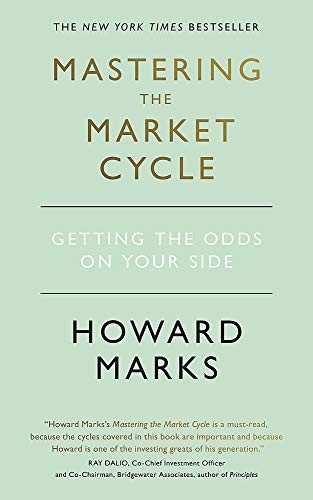
Talk to Mastering the Market Cycle like its author wrote you back.
Get the ideas that fit your life — not generic summaries.
- Chat with the book
- Audiobook-style main ideas
- Adapts to your life and goals
- Helps you take action
Mastering the Market Cycle, in detail
Mastering the Market Cycle is Howard Marks's systematic argument that investment returns depend less on predicting the future than on understanding where you currently stand in the various cycles that govern markets. Marks is the co-founder of Oaktree Capital and has written investor memos for decades; this book is the distillation of his thinking on cycles as a framework for positioning rather than forecasting.
The book identifies multiple cycles that overlap and interact: the economic cycle, the credit cycle, the profit cycle, and — most importantly — the cycle of investor psychology. The psychological cycle is what amplifies the others. When sentiment is optimistic, investors accept lower risk premiums, lending standards loosen, and asset prices rise above fundamental value. When sentiment turns, the same dynamics work in reverse and often overshoot on the downside. Marks argues that the psychological cycle is simultaneously the most powerful and the most predictable in terms of its eventual direction, even if its timing can't be called in advance.
Much of the book is spent on the concept of knowing where you stand. Marks doesn't claim to predict tops and bottoms; he claims that at extremes, the odds are knowable. When greed dominates, risk is elevated even if prices keep rising. When fear dominates, the risk-return trade-off improves. The investor's job is to be more aggressive when the odds favor aggression and more defensive when they don't — a discipline Marks calls moving the dial.
The writing is deliberate and somewhat repetitive, which reflects Marks's belief that the ideas are counterintuitive enough to require reinforcement. Some readers find the repetition useful; others find the book could have been a long essay. The core insight — that psychology-driven cycles create predictable extremes without predictable timing — is genuinely valuable for anyone managing money through volatile periods.
The big ideas
- 1.
Markets move in cycles, and the most important cycle is investor psychology. Greed and fear amplify every other cycle and are themselves cyclical.
- 2.
You can't predict when a cycle will turn, but you can often recognize the extreme. Knowing whether you're near a top or a bottom changes how you should position.
- 3.
Risk is not just volatility. It is the probability of permanent loss, which rises when investors accept low risk premiums due to overconfidence and falls when fear has pushed prices well below value.
