Means of Ascent: The Years of Lyndon Johnson, Volume II by Robert A. Caro is a 1990 biography book about political ambition, power and corruption, election fraud. Johnson's 87-vote victory in the 1948 Democratic Senate primary was the product of ballot fraud in South Texas, documented by Caro with unusual specificity and confirmed by participants.
Summary
Means of Ascent is the second volume of Robert Caro's multi-decade biography of Lyndon Johnson, covering the years between Johnson's defeat in the 1941 Senate race and his stolen victory in the 1948 Democratic primary. It is one of the most forensic accounts of election fraud in American political biography, and it poses a question about democratic institutions that Caro never fully answers: if the democratic system is rigged at the point of entry, what does that mean for the legitimacy of everything that follows?
The book opens with World War II, during which Johnson served briefly in a Navy inspection tour of the Pacific — Caro is withering about the contrast between Johnson's carefully cultivated war-hero image and the reality of his service, which lasted weeks and involved one combat flight in which he was a passenger. The extended portrait of Coke Stevenson, the genuine Texas hero and governor whom Johnson defeated in 1948, is one of Caro's most striking passages: Stevenson emerges as almost mythically principled, the figure against whom Johnson's moral character is measured and found wanting.
The core of the volume is the 1948 Democratic primary and its aftermath. Johnson trailed Stevenson after the initial vote count. In the weeks that followed, ballot boxes in South Texas were manipulated, certification proceedings were subverted, and Johnson won by 87 votes — earning him the nickname "Landslide Lyndon" as a bitter joke. Caro documents the fraud in meticulous detail, drawing on the testimony of participants and the surviving paper trail. The conclusion is unambiguous: Johnson stole the election.
Caro does not reduce Johnson to villainy. The portrait is more complicated than that. What Means of Ascent establishes is that Johnson understood, from the beginning, that power required ruthlessness, and that he was willing to be ruthless. The question that animates the entire biography — whether a man of Johnson's methods could also produce genuine good — is posed here in its starkest form.

Talk to Means of Ascent: The Years of Lyndon Johnson, Volume II like its author wrote you back.
Get the ideas that fit your life — not generic summaries.
- Chat with the book
- Audiobook-style main ideas
- Adapts to your life and goals
- Helps you take action
Key takeaways
- 1.
Johnson's 87-vote victory in the 1948 Democratic Senate primary was the product of ballot fraud in South Texas, documented by Caro with unusual specificity and confirmed by participants.
- 2.
His World War II service was largely ceremonial, but he cultivated a war-hero image that was central to his political identity and demonstrably false.
- 3.
Coke Stevenson's portrait serves as a moral counterpoint: a Texas politician who built his career on genuine public service and refused to use the methods that would have saved his Senate race.
- 4.
The Texas political machinery that delivered the 1948 election depended on George Parr, the 'Duke of Duval County,' whose control of South Texas vote counts was systematic and durable.
- 5.
Johnson's campaign apparatus was technically advanced for its era: the use of helicopters for barnstorming and radio spots was innovative, but innovation coexisted with fraud.
- 6.
The certification process for the 1948 election was itself corrupted — Johnson's operatives controlled key procedural bottlenecks that allowed disputed returns to be finalized before legal challenges could succeed.
- 7.
Caro's methodology is characteristic: he interviews hundreds of participants, reads every available document, and pieces together what happened from multiple overlapping sources.
- 8.
The volume establishes the governing paradox of Caro's portrait: the same ruthlessness that made Johnson capable of historic good — the Civil Rights Act, Medicare — was visible from the beginning in what it cost others.
Discussion questions
Use these on your own, with a book club, or as chat starters in Superbook. Book club version, ready to copy or print →
- 1.
Caro documents the election fraud with unusual specificity. Does the evidence convince you, or do you find the reconstruction too dependent on testimony after the fact?
- 2.
What does Johnson's cultivated war-hero persona — built on a brief Pacific inspection tour — suggest about his relationship to truth in political life?
- 3.
Coke Stevenson is presented as an almost mythically principled figure. Does that portrait feel like history or like a morality contrast constructed for narrative purposes?
- 4.
If you accept that Johnson stole the 1948 election, how does that change how you evaluate the legislative achievements of his presidency?
- 5.
Caro spent years on this volume alone. What does that level of sustained attention produce in a biography that cannot be achieved by a quicker account?
- 6.
The electoral fraud described here was systematic and involved many participants. What does that say about the culture of Texas Democratic politics in the 1940s?
- 7.
Johnson understood early that power required ruthlessness. Is that a pragmatic insight or a moral failure, and does the distinction matter?
- 8.
Caro's admiration for Stevenson is evident. Does a biographer's moral sympathy with one figure undermine his fairness to another?
- 9.
The procedural manipulation of the certification process is less dramatic than the ballot stuffing. Which form of fraud do you find more troubling, and why?
- 10.
This volume ends with Johnson in the Senate. How does knowing what he eventually accomplishes — and what it costs — shape how you read this earlier period?
- 11.
What does this account of 1948 Texas politics suggest about the relationship between democratic form and democratic substance?
- 12.
Caro is explicit about his methodology and sources. Where do you see him filling gaps with inference, and does he flag those moments adequately?
Themes
Frequently asked questions
-
Do I need to read Volume I before Means of Ascent?
It helps. The Path to Power covers Johnson's origins and early career, and the portrait of his character is more fully developed there. Means of Ascent can be read independently but Caro's observations about Johnson's patterns will carry more weight if you've read Volume I.
-
Is Means of Ascent worth reading on its own?
Yes, particularly if you're interested in how elections can be systematically corrupted within ostensibly democratic institutions. The 1948 primary is a remarkable historical episode and Caro's documentation of it is meticulous.
-
How long does it take to read Means of Ascent?
About 400 pages, roughly 18-20 hours. Caro's prose is dense with detail but narrative enough to move. The core section on the 1948 election is genuinely suspenseful despite a known outcome.
-
Is Robert Caro fair to Lyndon Johnson?
Caro is honest about Johnson's methods while crediting his eventual legislative achievements. In Means of Ascent particularly, the portrait is damning. Caro does not hide his admiration for Coke Stevenson, which gives the account a moral coloring that some readers find unbalanced.
-
What is the most shocking revelation in Means of Ascent?
The specificity of the 1948 ballot fraud — names, ballot boxes, the exact sequence of certification manipulation. Caro doesn't present it as an allegation; he presents it as documented fact with named participants.
Similar books
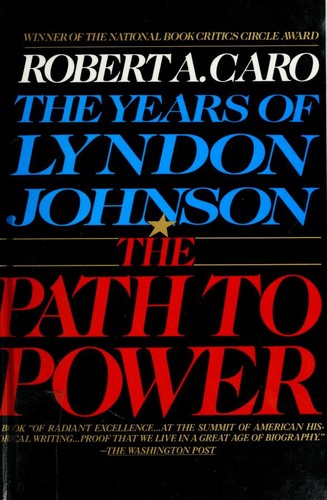
The Path to Power
Robert A. Caro

Master of the Senate: The Years of Lyndon Johnson, Volume III
Robert A. Caro
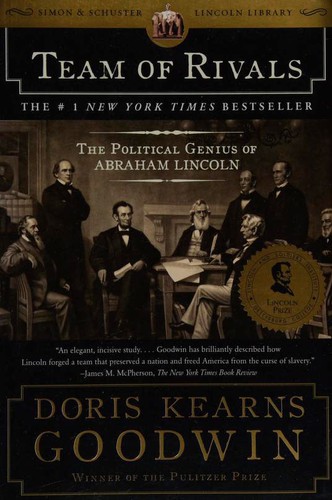
Team of Rivals: The Political Genius of Abraham Lincoln
Doris Kearns Goodwin

Grant
Ron Chernow
