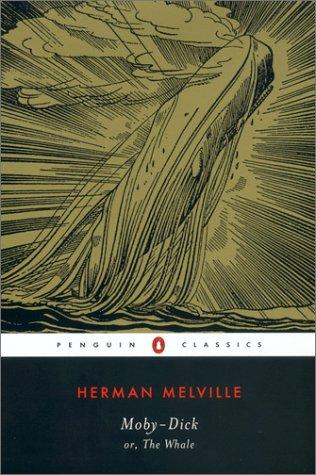
Talk to Moby-Dick like its author wrote you back.
Get the ideas that fit your life — not generic summaries.
- Chat with the book
- Audiobook-style main ideas
- Adapts to your life and goals
- Helps you take action
What it argues
Moby-Dick opens with one of the most famous sentences in American literature — "Call me Ishmael" — and immediately establishes a voice that is learned, digressive, sardonic, and strange. Ishmael signs onto a whaling ship out of Nantucket, joins a crew drawn from every corner of the globe, and gradually discovers that the captain, Ahab, has a purpose beyond commercial whaling: he is hunting the white sperm whale that took his leg on a previous voyage. The rest of the novel is the hunt.
But to describe Moby-Dick as a novel about whale hunting is like describing King Lear as a play about inheritance. The whale becomes, in Ahab's mind and then in Ishmael's narration, a repository for everything unknowable: God, fate, malice, indifference. Ahab's quest is insane, and Melville knows it; but he also takes it seriously, giving Ahab some of the most powerful speeches in the American canon. The question the novel asks is not whether the whale is actually evil — it almost certainly isn't — but what it means to organize your life around an enemy that may not even recognize your existence.
What it gets right
- 1.
Ahab's obsession is not irrational in its own terms — he has a worldview, a theology of sorts, in which the whale represents active malice. Melville doesn't treat him as simply insane.
- 2.
The novel's digressions on cetology, rope-making, and the economics of whaling are arguments about the limits of knowledge — how much you can know about something and still miss its essential nature.
- 3.
Ishmael survives not because he is better or wiser than the others, but because he is slightly less committed to Ahab's narrative. Distance saves him.
What it covers
Who wrote it
Herman Melville (1819–1891) was an American novelist, short story writer, and poet, best known for Moby-Dick and the novella Billy Budd. He worked as a sailor and merchant seaman in his early twenties, experiences that shaped his major fiction. Moby-Dick was a commercial failure during his lifetime, and Melville largely abandoned novel-writing afterward, working for nineteen years as a customs inspector in New York. He was rediscovered in the 1920s and is now considered one of the foundational figures of American literature.
