Moby-Dick by Herman Melville is a 1851 literary fiction book about obsession, fate and free will, nature and the sublime. Ahab's obsession is not irrational in its own terms — he has a worldview, a theology of sorts, in which the whale represents active malice. Melville doesn't treat him as simply insane.
Summary
Moby-Dick opens with one of the most famous sentences in American literature — "Call me Ishmael" — and immediately establishes a voice that is learned, digressive, sardonic, and strange. Ishmael signs onto a whaling ship out of Nantucket, joins a crew drawn from every corner of the globe, and gradually discovers that the captain, Ahab, has a purpose beyond commercial whaling: he is hunting the white sperm whale that took his leg on a previous voyage. The rest of the novel is the hunt.
But to describe Moby-Dick as a novel about whale hunting is like describing King Lear as a play about inheritance. The whale becomes, in Ahab's mind and then in Ishmael's narration, a repository for everything unknowable: God, fate, malice, indifference. Ahab's quest is insane, and Melville knows it; but he also takes it seriously, giving Ahab some of the most powerful speeches in the American canon. The question the novel asks is not whether the whale is actually evil — it almost certainly isn't — but what it means to organize your life around an enemy that may not even recognize your existence.
The book is also genuinely difficult. Melville interrupts the narrative for extended treatises on cetology, on the mechanics of whaling, on the history of how the whale has been represented in art and literature. These chapters are not filler. They are part of the argument: Melville is showing how much human knowledge has accumulated about the whale and how little that knowledge penetrates the whale's actual nature. The digression is the point.
Moby-Dick was a commercial failure on publication. It was rediscovered in the twentieth century and is now widely regarded as the central work of American literature. It is long, it is strange, and it demands patience. The readers who bounce off it usually do so around page one hundred, in the middle of the cetology chapters. Those who make it through typically describe it as one of the most rewarding reading experiences of their lives.
Talk to Moby-Dick like its author wrote you back.
Get the ideas that fit your life — not generic summaries.
- Chat with the book
- Audiobook-style main ideas
- Adapts to your life and goals
- Helps you take action
Key takeaways
- 1.
Ahab's obsession is not irrational in its own terms — he has a worldview, a theology of sorts, in which the whale represents active malice. Melville doesn't treat him as simply insane.
- 2.
The novel's digressions on cetology, rope-making, and the economics of whaling are arguments about the limits of knowledge — how much you can know about something and still miss its essential nature.
- 3.
Ishmael survives not because he is better or wiser than the others, but because he is slightly less committed to Ahab's narrative. Distance saves him.
- 4.
The crew of the Pequod represents something like the American project: diverse, skilled, materially motivated, capable of genuine community — all of it drawn into service of one man's private obsession.
- 5.
Queequeg's friendship with Ishmael is the novel's warmest relationship, and it cuts against every convention of who deserves sympathy and humanity in nineteenth-century American fiction.
- 6.
The whiteness of the whale is the subject of one of the novel's most celebrated chapters. White is associated not with purity but with absence — the blankness onto which meaning gets projected.
- 7.
Melville published the novel in 1851, when American whaling was near its peak. The industry was essentially strip-mining the ocean. The novel knows this without quite saying it.
- 8.
The ending — the wreck of the Pequod, Ahab's death, Ishmael's survival — is not a moral judgment. It is just what happens when you sail at full speed toward a whale that doesn't care about you.
- 9.
The novel's strange structure (equal parts adventure story, encyclopedia, philosophy treatise, and drama) resists genre and may be why it took a century for readers to know what to do with it.
Discussion questions
Use these on your own, with a book club, or as chat starters in Superbook. Book club version, ready to copy or print →
- 1.
Ahab tells the crew the voyage is about profit, then reveals it's about revenge. How does the crew respond, and what does their response tell you about how people respond to charismatic authority?
- 2.
The cetology chapters (on the biology and classification of whales) frustrate many readers. Did you find them tedious, or do you think they're doing something essential? What?
- 3.
Ahab's famous speech to the whale — 'To the last I grapple with thee' — is one of the great expressions of defiant individualism in American literature. Is it heroic, tragic, or deluded?
- 4.
Starbuck opposes the voyage on rational and commercial grounds and repeatedly fails to act on that opposition. Is he a coward, or is his position more complicated?
- 5.
Ishmael is both narrator and participant, but he often fades from the story. Why do you think Melville constructed the narration this way?
- 6.
The whale never seems to be pursuing the Pequod — it responds to attacks but doesn't initiate them. What does it mean for Ahab to have organized his entire life around an enemy that doesn't know he exists?
- 7.
Queequeg is the first character Ishmael describes at length, and he is drawn with more dignity and fullness than almost any white character in the novel. What is Melville arguing?
- 8.
The chapter on the whiteness of the whale argues that whiteness signifies not purity but blankness — the terror of a universe with no meaning. Does that reading feel true to you?
- 9.
Melville's contemporary readers didn't know what to make of this book. It sold poorly and was largely forgotten for seventy years. Why do you think it took so long to be recognized?
- 10.
The Pequod's crew is drawn from a dozen nations and backgrounds. What does their diversity mean in the context of a voyage led by one man's obsession?
- 11.
The novel is often described as a critique of American exceptionalism — the idea that individual will can conquer nature, fate, and God. Is that reading too neat?
- 12.
If you stopped reading partway through, where did you stop and why? If you kept going, what made you?
- 13.
Ishmael survives. Does the novel offer any explanation for why him? Does it need to?
Themes
Frequently asked questions
-
Is Moby-Dick worth reading?
Yes, if you are prepared for a long, strange, often digressive book that is doing something unlike anything else in American fiction. It is not a light read and it is not a quick one. It is also unlike any other book you will read.
-
Is Moby-Dick hard to read?
It is long (about 210,000 words) and structurally unusual. The chapters on whale biology, ship mechanics, and the history of cetology can feel like an interruption for readers expecting a straightforward adventure. Those chapters are the book's most argued-about feature — some readers find them essential, others never get through them.
-
What is Moby-Dick actually about?
On the surface, a whaling voyage and the captain's obsessive hunt for a white whale. More broadly, it's about what happens when a human being decides that the universe has a specifically malicious relationship to him personally — and what that decision costs everyone around him.
-
Who shouldn't read Moby-Dick?
Readers who want plot momentum, relatable characters, or emotional resolution will find it frustrating. The novel digresses constantly, its narrator is detached and philosophical, and it ends in destruction without moral redemption. If you need your commitment to a book to be rewarded with story, this may not be the right time.
-
Are there good abridged or adapted versions?
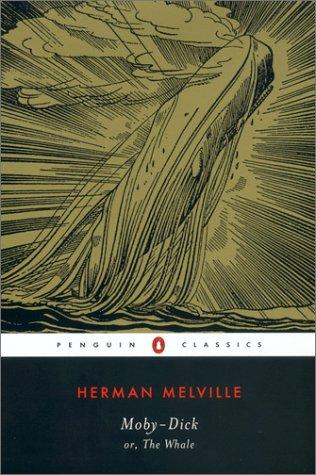
Abridged versions exist but cut the cetology chapters that are central to the novel's argument. Most scholars recommend reading the full text, at least once. The Norton Critical Edition is a good choice with useful annotations; the Penguin Classics edition is more portable.