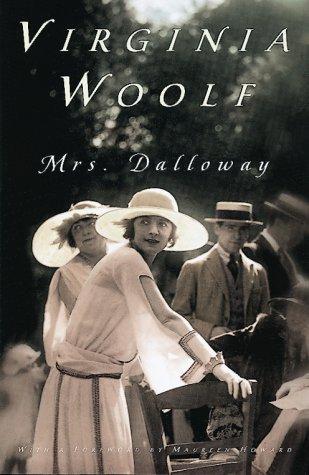
Talk to Mrs Dalloway like its author wrote you back.
Get the ideas that fit your life — not generic summaries.
- Chat with the book
- Audiobook-style main ideas
- Adapts to your life and goals
- Helps you take action
What it argues
Mrs Dalloway takes place over the course of a single June day in London in 1923, following Clarissa Dalloway — the wife of a politician, preparing for an evening party — and Septimus Warren Smith, a shell-shocked veteran who never intersects with Clarissa but exists in parallel throughout the novel. The Big Ben tolls mark time as both characters move through the city, their interior lives radically different in circumstance but mysteriously connected in Woolf's structuring intelligence.
The novel is organized by two questions it never answers directly: what does it cost to survive, and what is the relationship between social performance and inner life? Clarissa hosts parties, manages social niceties, navigates a marriage she chose and a life she sometimes feels she chose wrong. Septimus cannot perform at all; the war has broken his ability to participate in ordinary reality, and the doctors who treat him are interested only in restoring his surface function. The two characters never meet, but Septimus's fate at the end of the novel ripples into Clarissa's evening in a way that is the book's emotional climax.
What it gets right
- 1.
Woolf's dual plot — Clarissa's party preparations and Septimus's psychic disintegration — are never combined, but the structural rhyme between them is the novel's central argument: survival has a cost, and different people pay it differently.
- 2.
The treatment of Septimus by Dr. Holmes and Sir William Bradshaw is a precise indictment of how social norms get enforced on people who cannot or will not perform sanity. Woolf had direct experience with this.
- 3.
Time in the novel is both objective (Big Ben tolling, the day progressing) and radically subjective — a single moment can expand to hold decades of memory. The technique enacts Woolf's argument about how consciousness actually experiences duration.
What it covers
Who wrote it
Virginia Woolf (1882–1941) was an English writer and essayist, one of the central figures of modernist literature and a founding member of the Bloomsbury Group. Her major novels include Mrs Dalloway, To the Lighthouse, Orlando, and The Waves. She was also the author of the influential essays A Room of One's Own and Three Guineas. Woolf suffered throughout her life from severe depression and was periodically institutionalized. She died by suicide in 1941. Her Letters and Diaries, published posthumously, are among the great documents of the literary life.
