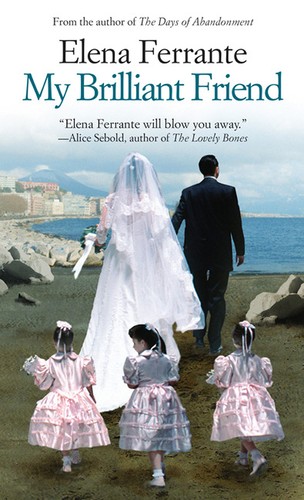
Talk to My Brilliant Friend like its author wrote you back.
Get the ideas that fit your life — not generic summaries.
- Chat with the book
- Audiobook-style main ideas
- Adapts to your life and goals
- Helps you take action
What it argues
My Brilliant Friend is the first volume of Elena Ferrante's Neapolitan Novels, following Elena Greco and Lila Cerullo from their childhood in a poor Naples neighborhood in the 1950s into early adolescence. Elena narrates in retrospect, from old age, after Lila has inexplicably erased herself from the world. The novel is essentially Elena's attempt to understand a lifelong friendship — and rivalry — that shaped everything about who she became.
The book is saturated with violence. Violence in the neighborhood is ordinary, structural: husbands beat wives, fathers beat children, men beat other men over territorial and economic slights. The neighborhood is a closed system with its own economy, hierarchies, and rules, and Ferrante renders it with ferocious specificity. Into this world she places two exceptional girls who both recognize each other's intelligence and cannot stop measuring themselves against each other. Lila is dazzling, mercurial, capable of intuitive leaps that leave Elena winded. Elena is steadier, more dutiful, and has the devastating self-awareness to know that she has always, in some part of herself, wanted to become Lila.
What it gets right
- 1.
Ferrante depicts female friendship as a relationship that can be both the primary emotional bond of a life and a site of ongoing rivalry, without either of those things canceling the other out.
- 2.
The neighborhood operates as a character — the rione's claustrophobic economy of violence, reputation, and limited escape routes is the novel's true antagonist.
- 3.
Education in the novel functions as the only plausible exit from the neighborhood, and the decision about who gets it (boys, not girls) is depicted as the fundamental injustice that shapes both women's lives.
What it covers
Who wrote it
Elena Ferrante is the pseudonym of an Italian novelist whose identity has been kept secret since her debut in 1992. Her Neapolitan Novels — My Brilliant Friend (2011), The Story of a New Name (2012), Those Who Leave and Those Who Stay (2013), and The Story of the Lost Child (2015) — were translated by Ann Goldstein and became an international phenomenon. The quartet was adapted into an acclaimed HBO/RAI television series beginning in 2018. Ferrante has published four other novels and a collection of essays. Her anonymity is itself a literary statement about the relationship between authorship and public identity.
