Fantasy · Book club
Neverwhere book club questions
Here are 12 book club questions for Neverwhere by Neil Gaiman, ordered to open easily and end somewhere worth arguing about. Copy them, print them, or bring them up one at a time.
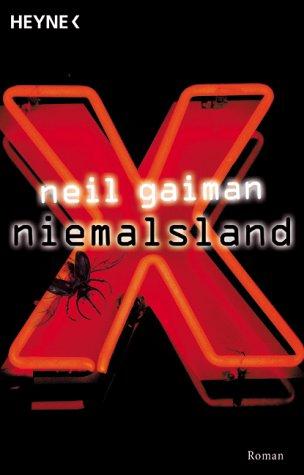
Neverwhere began as a BBC TV series in 1996 and was novelized by Gaiman in the same year.
Neil Gaiman · 1996 · 7h 0m
Full summary and key takeaways →The 12 questions
- 1.
Richard chooses to help Door when everyone else ignores her. Is that presented as virtue, compulsion, or stupidity? Does the novel know the difference?
- 2.
London Below is where the people society has discarded end up. Is that a metaphor for homelessness specifically, or something broader?
- 3.
The ending offers Richard a genuine choice. Did he make the right one? What would you have chosen?
- 4.
Croup and Vandemar are played partly for dark comedy. Does that approach make them more or less frightening?
- 5.
Door's story — her family murdered, her powers extraordinary — drives the plot, but the novel spends more time inside Richard's head. Is that a structural problem?
- 6.
The tube stations, streets, and markets of real London are reinterpreted as mythology. If you know London, does that add texture? If you don't, does it create distance?
- 7.
Islington's revelation is the novel's biggest shock. In retrospect, what were the signs?
- 8.
The Marquis de Carabas is morally ambiguous throughout. Does the novel resolve that ambiguity or leave it open?
- 9.
Neverwhere is a relatively short, fast fantasy with a clear moral. Is that a strength or a limitation compared to longer, more complex work in the genre?
- 10.
The novel was originally a TV series. Does the novelization feel like it was written for the page or adapted from something else?
- 11.
Richard's ordinary life is shown as comfortable but empty. Is the novel romanticizing poverty and danger, or making a real point about the cost of safety?
- 12.
Which character in London Below would you most want a full novel about? What story would you tell?
How to run the discussion
- Pick six to eight, not all of them. An hour of real discussion covers fewer questions than anyone expects, and racing the list is what makes a book club feel like homework.
- Open with what people noticed, not what they concluded. Asking for a verdict first hardens opinions before anyone has heard each other.
- Let the disagreement run. The questions below that split a room are the ones worth the time; the ones everyone answers the same way can be skipped.
- Ask the quiet person a specific question. A direct, narrow question is far easier to answer than an open invitation to contribute.
Themes worth steering toward
If the conversation stalls, these are the threads that usually restart it.
Common questions
What are good book club questions for Neverwhere?
Here are 12 book club questions for Neverwhere by Neil Gaiman, ordered to open easily and end somewhere worth arguing about. The strongest openers ask what each reader noticed rather than what they concluded, and the discussion usually turns on invisibility and marginalization, urban mythology, ordinary life versus the extraordinary.
How long should a book club discussion of Neverwhere last?
Most groups run 60 to 90 minutes of actual discussion. That is roughly six to eight questions, not all of them, so pick the ones that suit your group rather than working down the list in order.
What are the main themes in Neverwhere?
Invisibility and marginalization, Urban mythology, Ordinary life versus the extraordinary, Identity and transformation, The city as labyrinth. Those are the threads most likely to divide a room, which makes them the useful places to steer a discussion that has gone quiet.
Picking the next one? See books like Neverwhere or questions for other book club picks.
