Philosophy · Book club
Nicomachean Ethics book club questions
Here are 12 book club questions for Nicomachean Ethics by Aristotle, ordered to open easily and end somewhere worth arguing about. Copy them, print them, or bring them up one at a time.
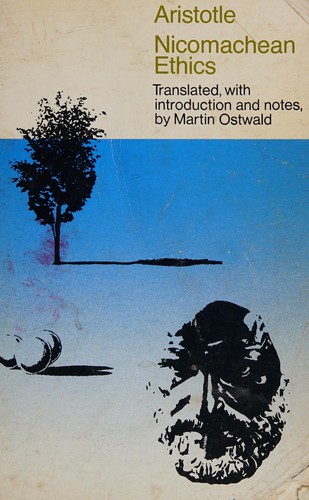
The Nicomachean Ethics is Aristotle's systematic inquiry into what makes a human life go well.
Aristotle · 1893 · 5h 40m
Full summary and key takeaways →The 12 questions
- 1.
Aristotle defines happiness as activity in accordance with virtue, not a feeling. Does that match your intuition about what makes a life go well?
- 2.
Pick a virtue you think you have. Can you identify the two vices — excess and deficiency — that bound it? What does that tell you about where you actually sit?
- 3.
Aristotle says we become virtuous by practicing virtuous acts, before we fully understand why they are virtuous. Is there a skill or trait in your own life that developed the same way?
- 4.
Practical wisdom is the ability to perceive what a situation requires. Can you describe a time when you had the right rule but applied it wrong — or the right perception but lacked the courage to act on it?
- 5.
Aristotle distinguishes friendships of utility, pleasure, and virtue. Which type dominates your current closest relationships? Does the distinction hold up in your experience?
- 6.
The Ethics holds that a good life requires external goods — health, decent resources, good fortune — not just virtuous character. Does that concession seem like a strength or a weakness of the theory?
- 7.
Aristotle says moral weakness is knowing what to do and failing to do it. Where in your life do you experience this most acutely, and what explains the gap?
- 8.
Book X argues that contemplation is the highest activity. Does intellectual work feel like the summit of human flourishing to you, or does that conclusion seem too narrow?
- 9.
Aristotle thinks children cannot be happy in the full sense because their character is not yet stable. At what point in your own life did your character begin to feel settled?
- 10.
The mean is relative to the person — what counts as courage for one person may be recklessness for another. Does that make ethics too subjective, or does it reflect something true about moral life?
- 11.
Aristotle treats politics as an extension of ethics: the city exists to enable human flourishing. What would a city built on that premise look like today?
- 12.
If you had to name the virtue you find hardest to cultivate, what would it be, and what habit would Aristotle say you need to build?
How to run the discussion
- Pick six to eight, not all of them. An hour of real discussion covers fewer questions than anyone expects, and racing the list is what makes a book club feel like homework.
- Open with what people noticed, not what they concluded. Asking for a verdict first hardens opinions before anyone has heard each other.
- Let the disagreement run. The questions below that split a room are the ones worth the time; the ones everyone answers the same way can be skipped.
- Ask the quiet person a specific question. A direct, narrow question is far easier to answer than an open invitation to contribute.
Themes worth steering toward
If the conversation stalls, these are the threads that usually restart it.
Common questions
What are good book club questions for Nicomachean Ethics?
Here are 12 book club questions for Nicomachean Ethics by Aristotle, ordered to open easily and end somewhere worth arguing about. The strongest openers ask what each reader noticed rather than what they concluded, and the discussion usually turns on virtue, happiness, moral character.
How long should a book club discussion of Nicomachean Ethics last?
Most groups run 60 to 90 minutes of actual discussion. That is roughly six to eight questions, not all of them, so pick the ones that suit your group rather than working down the list in order.
What are the main themes in Nicomachean Ethics?
Virtue, Happiness, Moral character, Practical wisdom, Friendship. Those are the threads most likely to divide a room, which makes them the useful places to steer a discussion that has gone quiet.
Picking the next one? See books like Nicomachean Ethics or questions for other book club picks.
