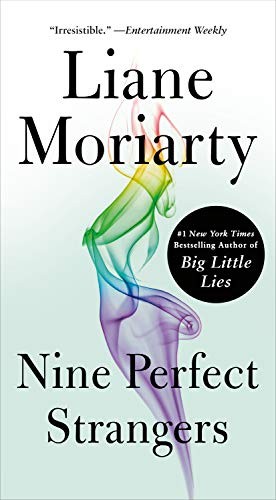
Talk to Nine Perfect Strangers like its author wrote you back.
Get the ideas that fit your life — not generic summaries.
- Chat with the book
- Audiobook-style main ideas
- Adapts to your life and goals
- Helps you take action
Nine Perfect Strangers, in detail
Nine Perfect Strangers gathers nine guests at Tranquillum House, an exclusive wellness retreat in the Australian countryside run by the enigmatic Masha — a former Russian corporate executive who had a near-death experience and emerged convinced she can guide others through radical transformation. The nine guests arrive carrying different varieties of damage: grief, failed marriages, celebrity anxiety, family tragedy, and the specific exhaustion of people who have tried many self-help solutions and remain fundamentally stuck. The novel takes its time establishing each character before the retreat begins to deviate from its brochure in increasingly alarming ways.
What Moriarty is doing is a satire of the wellness industrial complex that also takes the desires it satirizes seriously. The guests want something real — transformation, peace, an end to grief — and Masha is both a fraud and a genuine believer in what she's doing. The novel refuses to make the critique simple. The methods are wrong; the needs they address are not. The ethical questions about consent and manipulation aren't resolved cheaply, and Masha is given enough interior life to be something other than a villain.
The book is slower than Big Little Lies and more uneven, but it has real set pieces and moments of unexpected emotional force, particularly around the Marconi family, who arrive as a unit still shattered by their son's suicide and who get the novel's most honest treatment of grief. Moriarty's talent for social observation is deployed well in the ensemble — nine very different people performing health and transformation for each other is fertile material.
This is not Moriarty's best book, but it is a distinctive one. The premise is slightly absurdist in ways that Big Little Lies wasn't, and readers who need their premises fully plausible will notice the strain. But for readers who enjoyed the character-ensemble dynamic of the earlier novel and want something with more obvious satirical intent, Nine Perfect Strangers delivers. The television adaptation condensed and reconceptualized it significantly; the novel is more comedic and more interested in the ensemble than the Hulu version suggests.
The big ideas
- 1.
Masha is drawn as a true believer whose methods are unethical — this ambiguity is central; the novel refuses to simply condemn wellness culture without acknowledging what it is responding to.
- 2.
The Marconi family's grief is the novel's emotional center, and Moriarty handles their loss with more care and specificity than the thriller elements around it.
- 3.
The ensemble structure means no single character carries the novel — readers will find some storylines much more compelling than others, which is both a feature and a risk.
