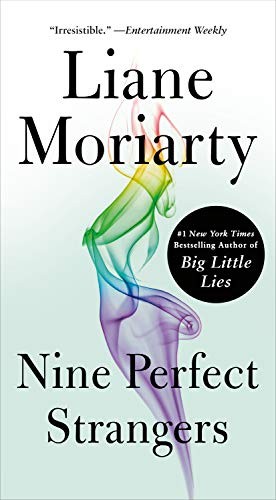
Nine Perfect Strangers by Liane Moriarty is a 2018 contemporary fiction book about grief and reinvention, wellness culture and its promises, consent and manipulation. Masha is drawn as a true believer whose methods are unethical — this ambiguity is central; the novel refuses to simply condemn wellness culture without acknowledging what it is responding to.
Summary
Nine Perfect Strangers gathers nine guests at Tranquillum House, an exclusive wellness retreat in the Australian countryside run by the enigmatic Masha — a former Russian corporate executive who had a near-death experience and emerged convinced she can guide others through radical transformation. The nine guests arrive carrying different varieties of damage: grief, failed marriages, celebrity anxiety, family tragedy, and the specific exhaustion of people who have tried many self-help solutions and remain fundamentally stuck. The novel takes its time establishing each character before the retreat begins to deviate from its brochure in increasingly alarming ways.
What Moriarty is doing is a satire of the wellness industrial complex that also takes the desires it satirizes seriously. The guests want something real — transformation, peace, an end to grief — and Masha is both a fraud and a genuine believer in what she's doing. The novel refuses to make the critique simple. The methods are wrong; the needs they address are not. The ethical questions about consent and manipulation aren't resolved cheaply, and Masha is given enough interior life to be something other than a villain.
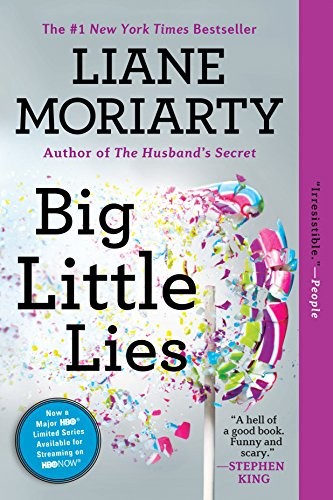
The book is slower than Big Little Lies and more uneven, but it has real set pieces and moments of unexpected emotional force, particularly around the Marconi family, who arrive as a unit still shattered by their son's suicide and who get the novel's most honest treatment of grief. Moriarty's talent for social observation is deployed well in the ensemble — nine very different people performing health and transformation for each other is fertile material.
This is not Moriarty's best book, but it is a distinctive one. The premise is slightly absurdist in ways that Big Little Lies wasn't, and readers who need their premises fully plausible will notice the strain. But for readers who enjoyed the character-ensemble dynamic of the earlier novel and want something with more obvious satirical intent, Nine Perfect Strangers delivers. The television adaptation condensed and reconceptualized it significantly; the novel is more comedic and more interested in the ensemble than the Hulu version suggests.
Talk to Nine Perfect Strangers like its author wrote you back.
Get the ideas that fit your life — not generic summaries.
- Chat with the book
- Audiobook-style main ideas
- Adapts to your life and goals
- Helps you take action
Key takeaways
- 1.
Masha is drawn as a true believer whose methods are unethical — this ambiguity is central; the novel refuses to simply condemn wellness culture without acknowledging what it is responding to.
- 2.
The Marconi family's grief is the novel's emotional center, and Moriarty handles their loss with more care and specificity than the thriller elements around it.
- 3.
The ensemble structure means no single character carries the novel — readers will find some storylines much more compelling than others, which is both a feature and a risk.
- 4.
The wellness industry satire is light enough that devotees of retreats and therapy will recognize the observations without feeling attacked, which is probably intentional.
- 5.
The consent question — what can you justifiably do to someone who asked you to help them change — is genuinely interesting and not given an easy answer.
- 6.
Frances's arc (a romance novelist processing a professional humiliation) gives the novel its warmth and much of its humor, particularly in the first half.
- 7.
The novel ends in a way that suggests transformation is possible but not through what Masha did — an implicit argument that the need is real even when the method is wrong.
Discussion questions
Use these on your own, with a book club, or as chat starters in Superbook. Book club version, ready to copy or print →
- 1.
Masha's methods are clearly unethical, but some of the guests report genuine benefit. How does the novel want you to hold that tension?
- 2.
The Marconi family's storyline is the most emotionally serious element of the book. Did you find it integrated well with the comedic elements, or did the tonal shifts feel jarring?
- 3.
Which of the nine guests did you find most fully developed? Which felt thin?
- 4.
Moriarty is satirizing the wellness industry while acknowledging the real needs it serves. Where do you think she lands — is this a net critique or a net endorsement of the impulse to transform?
- 5.
The consent question is central to what Masha does. At what point, if any, is it acceptable to manipulate people toward outcomes they say they want?
- 6.
Frances's professional humiliation (a romance novelist confronting the internet's power over her career) is very specific to 2018. Does it still resonate?
- 7.
How does this compare to Big Little Lies? What does it do better, and what did you miss from the earlier novel?
- 8.
The retreat setting creates an artificially intensified social environment. Have you ever been in an environment like this — a workplace, a camp, a retreat — where proximity manufactured intimacy? How did that compare?
- 9.
The television adaptation (with Nicole Kidman as Masha) went in a quite different direction from the novel. For those who've seen it: which version of Masha did you prefer, and why?
- 10.
The novel's climax asks whether a traumatic experience can produce real change. What do you think the novel's answer is?
- 11.
Grief is at the center of several characters' stories. Does Moriarty handle grief more honestly here than in Big Little Lies, or less so?
- 12.
Nine perfect strangers — the title promises a certain kind of story about how people reveal themselves under pressure. Did the novel deliver on that promise?
Themes
Frequently asked questions
-
Do I need to read Big Little Lies before Nine Perfect Strangers?
No — they're standalone novels with unrelated characters and settings. Nine Perfect Strangers works entirely on its own. If you're new to Moriarty, Big Little Lies is the stronger starting point, but you can begin here.
-
How does the novel compare to the Hulu series?
Considerably different in tone. The novel is more comedic and ensemble-focused; the series foregrounds Masha's mysticism and psychological intensity. If you found the series too grim or too serious, the novel may surprise you. If you loved the series' look and atmosphere, the book is more lighthearted.
-
Is Nine Perfect Strangers Moriarty's best book?
Most readers and critics consider Big Little Lies her strongest work. Nine Perfect Strangers is longer, more uneven, and the satirical premise requires more suspension of disbelief. It has devoted fans but also more readers who found it an overlong middle act relative to the finale.
-
Is the wellness retreat depicted realistic?
Heightened but not impossible. The more extreme elements (unauthorized experimentation by the staff) are clearly fictional premise territory, but the social dynamics, the guests' anxieties, and the rhetoric of transformation are closely observed.
-
Who shouldn't read Nine Perfect Strangers?
Readers who need tightly plotted, fast-paced thrillers. The novel is long, character-heavy, and prioritizes ensemble dynamics over narrative momentum. It rewards readers willing to invest in nine backstories before things go sideways.