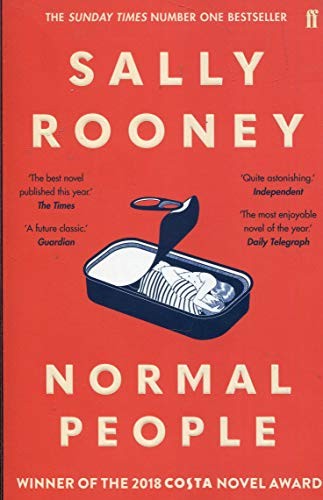
Talk to Normal People like its author wrote you back.
Get the ideas that fit your life — not generic summaries.
- Chat with the book
- Audiobook-style main ideas
- Adapts to your life and goals
- Helps you take action
What it argues
Normal People follows Connell and Marianne from their small-town Irish secondary school through their years at Trinity College Dublin. Connell is popular, athletic, privately insecure. Marianne is abrasive, isolated, secretly craving connection. They begin a relationship they both struggle to name, and the novel traces the decade-long push and pull between them — breaking apart, reconnecting, circling each other through different configurations of power and vulnerability.
The book is centrally about what people fail to say. Nearly every crisis in the novel stems from a sentence left unspoken: Connell doesn't tell Marianne they're together, Marianne doesn't tell Connell what she needs, both of them retreat behind silence when plain speech would change everything. Rooney is interested in how class shapes these silences — Connell's anxiety about his working-class background among Trinity students, Marianne's wealthy family and their particular brand of cruelty, the way money and education confer or withdraw social permission to speak.
What it gets right
- 1.
Most of the novel's suffering is caused by things not said — Rooney is meticulous about showing how silence is often a strategy for maintaining plausible deniability rather than protection.
- 2.
Class anxiety is depicted as a bodily experience, not an abstract category: Connell physically contracts in certain rooms, at certain parties, in ways he can barely articulate.
- 3.
The relationship's power dynamic reverses between school and university — who holds social capital in a given setting determines who has permission to want things openly.
What it covers
Who wrote it
Sally Rooney is an Irish novelist born in 1991 in County Mayo. She studied English at Trinity College Dublin and was a competitive debater. Her debut novel, Conversations with Friends (2017), established her as one of the most discussed young writers in the English-speaking world. Normal People (2018), her second novel, won the Costa Novel Award and was adapted into a critically praised Hulu/BBC series in 2020. Her third novel, Beautiful World, Where Are You, appeared in 2021. She is widely associated with a generation of millennial literary fiction that takes class, digital life, and political disillusionment seriously as material.
