Talk to November 9 like its author wrote you back.
Get the ideas that fit your life — not generic summaries.
- Chat with the book
- Audiobook-style main ideas
- Adapts to your life and goals
- Helps you take action
What it argues
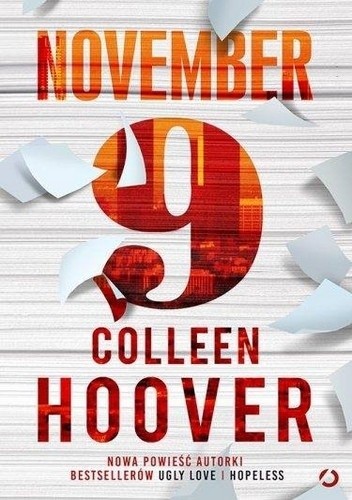
Fallon and Ben meet in a diner on November 9th, the day Fallon is leaving Los Angeles to move across the country. Rather than exchange numbers, they make a pact: they'll spend this one day together, and then meet again on November 9th each year for the next five years. No contact in between. The structure gives the book an unusual shape — each chapter is a different November 9th — and allows Hoover to compress a multi-year relationship into a series of single-day snapshots.
The book is in many ways a structural experiment: what does love look like when you only see someone one day a year? What does it mean to know someone through a handful of concentrated encounters rather than continuous daily accumulation? Fallon is an actress who suffered facial burns from a fire, and Ben is a writer. The tension between what they present to each other on their assigned days and who they actually are the other 364 days runs through the whole novel. When the secret at the center of Ben's character is revealed, it reframes the relationship's entire architecture.
What it gets right
- 1.
The annual-meeting structure compresses a relationship into its most concentrated moments, revealing how much of love is constructed from performed versions of ourselves.
- 2.
Fallon's physical scars are handled with more care than most romance novels manage — the book doesn't use them as pure metaphor and doesn't resolve them as a barrier to be overcome.
- 3.
Ben's secret reframes not just the relationship but the reader's entire understanding of how the novel was constructed — a structural move that pays off if you accept its emotional logic.
What it covers
Who wrote it
Colleen Hoover is an American author who self-published her debut novel Slammed in 2012 and became one of the bestselling fiction writers of the 2020s largely through reader word-of-mouth on BookTok. She has published more than twenty novels across romance, new adult, and contemporary fiction, including It Ends with Us, Verity, and Reminders of Him. She co-founded the charity The Bookworm Box, which donates proceeds to various organizations. Her work consistently explores the intersection of romantic convention and emotional darkness.
