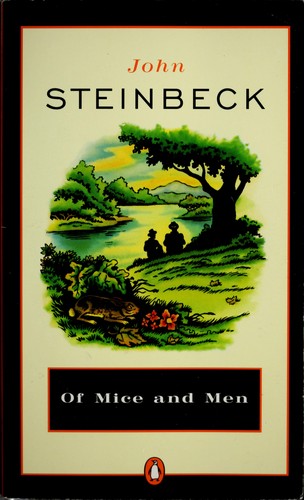
Talk to Of Mice and Men like its author wrote you back.
Get the ideas that fit your life — not generic summaries.
- Chat with the book
- Audiobook-style main ideas
- Adapts to your life and goals
- Helps you take action
Of Mice and Men, in detail
Of Mice and Men is a short novel — really a novella — published in 1937, two years before The Grapes of Wrath, and it covers much of the same Depression-era California ground in concentrated form. George Milton and Lennie Small are migrant ranch workers who travel together, which is itself unusual in this world. George is small, sharp, and protective; Lennie is physically enormous, mentally disabled, and capable of great violence without intent. They share a dream: save enough money to buy a small farm, grow their own food, keep rabbits. The dream is what keeps them going.
The novel is structured almost like a play — a few scenes, a small cast, a tight timeframe — and Steinbeck originally conceived it for theatrical adaptation. Everything that happens is compressed and deliberate. The ranch they arrive at has its own constellation of lonely people: Candy, the old swamper who fears being discarded when he's no longer useful; Crooks, the Black stable hand who lives apart from the others; Curley, the boss's aggressive son; and Curley's wife, who has no name, only a role. She is lonely and restless and dangerous, not because she is malicious but because she is a human being trapped in a situation that gives her no outlet.
The novel moves toward its ending with the inevitability of tragedy — you can feel it building from the first scene, when we learn what Lennie has already done before the story begins. Steinbeck doesn't withhold the outcome; he makes it inescapable. The final scene between George and Lennie, conducted in a deliberate echo of the novel's opening, is one of the most quietly devastating things in American fiction. Mercy and loss are held in the same gesture.
At 100-odd pages it reads in two hours, but the brevity is deceptive. The compressed form means every detail pulls weight. The mice, the puppy, Candy's dog — each is a station in an argument about what it costs to be tender in a brutal world. It is the most frequently banned book in American schools and the most frequently taught. Both reactions make sense.
The big ideas
- 1.
The dream of the farm is not naive — it is the one thing that makes the world of migratory labor survivable, and Steinbeck understands this even as he dismantles it.
- 2.
Lennie's violence is never malicious. He kills things by holding them too tight. This is a precise psychological portrait, not a convenient plot device.
- 3.
Loneliness is the novel's real subject. Every character except George and Lennie is isolated — Crooks by race, Candy by age and fear, Curley's wife by gender and marriage.
