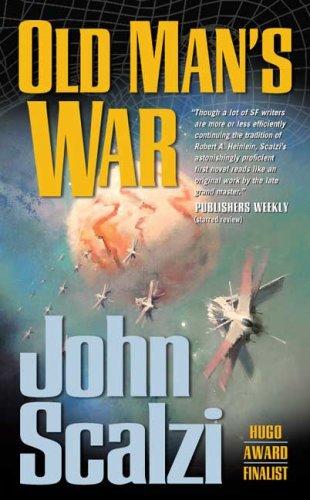
Talk to Old Man's War like its author wrote you back.
Get the ideas that fit your life — not generic summaries.
- Chat with the book
- Audiobook-style main ideas
- Adapts to your life and goals
- Helps you take action
What it argues
John Perry is 75 years old when he enlists in the Colonial Defense Forces. The deal is simple: the CDF gives old people new, enhanced bodies to fight humanity's interstellar wars; in exchange, soldiers serve two years in combat. Nobody who has done it comes back to explain exactly what the new body involves. Perry signs up on the day he visits his wife's grave, which tells you something about where he is in life. The premise is cheerfully high-concept, but Scalzi means it seriously: what happens to who you are when the body carrying you is completely replaced?
The book is a military science fiction novel in the Heinlein tradition — fast, funny, propulsive, full of characters who talk in the sardonic shorthand of soldiers who've seen too much. But underneath the action sequences is a genuine philosophical question about continuity of self. Perry is Perry in his new body, mostly. Except when he isn't. The novel tracks the widening gap between who he was at 75 and who combat is making him into, and it takes that gap more seriously than the genre usually does.
What it gets right
- 1.
The premise forces the question most military fiction avoids: if you are given a new body to fight, are you the same person who signed up? Scalzi makes that question plot-relevant, not just philosophical.
- 2.
Perry's 75-year-old perspective gives the book emotional weight that most military SF lacks — he's not an eager recruit, he's a man with nothing left to lose, which is its own kind of character study.
- 3.
The novel sits in the Heinlein tradition but doesn't romanticize military service the way Starship Troopers does. Combat is effective and brutal, not glorious.
What it covers
Who wrote it
John Scalzi is an American science fiction author and former president of the Science Fiction and Fantasy Writers of America. Old Man's War, originally self-published on his blog before being picked up by Tor Books, became the first of a six-book series and established him as one of the genre's most readable voices. His other novels include Redshirts, which won the 2013 Hugo Award for Best Novel, and The Kaiju Preservation Society. He blogs at Whatever and is known for his accessibility to fans and his frankness about the publishing industry.
