Philosophy · Book club
On Directing Film book club questions
Here are 11 book club questions for On Directing Film by David Mamet, ordered to open easily and end somewhere worth arguing about. Copy them, print them, or bring them up one at a time.
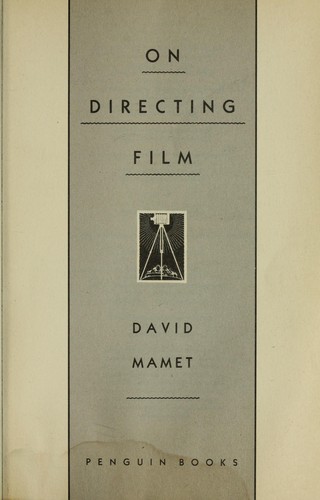
On Directing Film is David Mamet's account of lectures he gave at Columbia University's film school, transcribed and lightly edited into a short, blunt book about the craft of directing.
David Mamet · 1991 · 2h 0m
Full summary and key takeaways →The 11 questions
- 1.
Mamet argues the director should not photograph emotions but events that produce emotions. Think of a film moment that moved you — was it showing the emotion or the cause of it?
- 2.
He is explicitly contemptuous of much art cinema. Is his definition of good directing too narrow, or does that narrowness give it its usefulness?
- 3.
The book assumes the audience wants to construct meaning from incomplete information. Is that always true? Are there genres or audiences where it clearly isn't?
- 4.
Mamet draws heavily on Aristotle. Does the claim that drama is fundamentally about physical action in pursuit of a goal hold up when you apply it to films you admire?
- 5.
He says the most common mistake of beginning directors is to photograph a performance. Where do you see an equivalent mistake in other fields — over-explaining what should be shown, or showing what should be implied?
- 6.
The principle that each shot should ask 'what does the hero want here?' is discipline-inducing but potentially reductive. What kinds of scenes resist that framing?
- 7.
Mamet insists the script should describe only what can be photographed. What does that exclude, and is what it excludes important?
- 8.
The book is deliberately prescriptive and does not try to describe all valid approaches to filmmaking. Does that make it more useful or less useful as a guide?
- 9.
The lectures were given at Columbia film school. How does the pedagogical context shape the argument? Is it advice for professionals or for students, and does that distinction matter?
- 10.
He applies the same logic of sequenced uninflected events to writing. If you took 'don't explain, show what produces the effect' seriously in your own work, what would change?
- 11.
On Directing Film is about 100 pages. Mamet practices what he preaches in terms of economy. Did the brevity feel like a feature or a frustration?
How to run the discussion
- Pick six to eight, not all of them. An hour of real discussion covers fewer questions than anyone expects, and racing the list is what makes a book club feel like homework.
- Open with what people noticed, not what they concluded. Asking for a verdict first hardens opinions before anyone has heard each other.
- Let the disagreement run. The questions below that split a room are the ones worth the time; the ones everyone answers the same way can be skipped.
- Ask the quiet person a specific question. A direct, narrow question is far easier to answer than an open invitation to contribute.
Themes worth steering toward
If the conversation stalls, these are the threads that usually restart it.
Common questions
What are good book club questions for On Directing Film?
Here are 11 book club questions for On Directing Film by David Mamet, ordered to open easily and end somewhere worth arguing about. The strongest openers ask what each reader noticed rather than what they concluded, and the discussion usually turns on filmmaking, storytelling, craft.
How long should a book club discussion of On Directing Film last?
Most groups run 60 to 90 minutes of actual discussion. That is roughly six to eight questions, not all of them, so pick the ones that suit your group rather than working down the list in order.
What are the main themes in On Directing Film?
Filmmaking, Storytelling, Craft, Dramatic structure, Visual communication. Those are the threads most likely to divide a room, which makes them the useful places to steer a discussion that has gone quiet.
Picking the next one? See books like On Directing Film or questions for other book club picks.
