Philosophy · Book club
On War book club questions
Here are 12 book club questions for On War by Carl von Clausewitz, ordered to open easily and end somewhere worth arguing about. Copy them, print them, or bring them up one at a time.
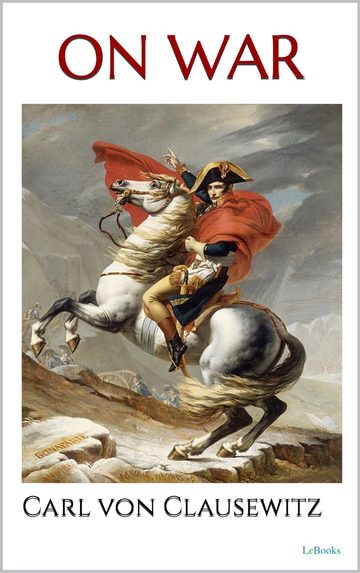
On War is the unfinished masterwork of the Prussian general and military theorist Carl von Clausewitz, published posthumously by his wife in 1832.
Carl von Clausewitz · 1832 · 16h 45m
Full summary and key takeaways →The 12 questions
- 1.
Clausewitz's definition — war as the continuation of politics by other means — has been called the most important sentence in strategic thinking. What does it imply about wars that seem to have no clear political purpose?
- 2.
Friction as Clausewitz defines it seems to apply well beyond military contexts. Where do you see friction degrading plans in organizations you're part of?
- 3.
The fog of war — incomplete, delayed, and often wrong information — is a structural feature of conflict. How do you make decisions well under that kind of uncertainty?
- 4.
Clausewitz argues that defensive war is structurally stronger than offensive. Does that claim hold in contexts outside military conflict?
- 5.
The remarkable trinity — passion, chance, and reason — suggests that war cannot be managed from a single perspective. What does that mean for civil-military relations?
- 6.
On War was never finished. How does reading an incomplete work affect your interpretation of the arguments you do find?
- 7.
Clausewitz writes from the experience of the Napoleonic Wars. Which of his observations seem most clearly time-bound, and which seem to have survived the two centuries since?
- 8.
The concept of the center of gravity — the point whose collapse would bring down the whole — is widely used in military planning. Can you identify a center of gravity in a competitive situation you're familiar with?
- 9.
Clausewitz is more interested in principles than rules. What is the difference, and does it change how you apply historical thinking to contemporary problems?
- 10.
War as a test of will rather than just material means suggests that morale, narrative, and political legitimacy are strategic variables. How do you see those variables operating in current conflicts?
- 11.
How does thinking of war as a political instrument rather than an autonomous event change how you assess whether a given conflict was a success or failure?
- 12.
On War is regularly assigned in military academies but rarely read completely. What does that pattern suggest about how foundational texts actually function in professional education?
How to run the discussion
- Pick six to eight, not all of them. An hour of real discussion covers fewer questions than anyone expects, and racing the list is what makes a book club feel like homework.
- Open with what people noticed, not what they concluded. Asking for a verdict first hardens opinions before anyone has heard each other.
- Let the disagreement run. The questions below that split a room are the ones worth the time; the ones everyone answers the same way can be skipped.
- Ask the quiet person a specific question. A direct, narrow question is far easier to answer than an open invitation to contribute.
Themes worth steering toward
If the conversation stalls, these are the threads that usually restart it.
Common questions
What are good book club questions for On War?
Here are 12 book club questions for On War by Carl von Clausewitz, ordered to open easily and end somewhere worth arguing about. The strongest openers ask what each reader noticed rather than what they concluded, and the discussion usually turns on war and politics, strategy, friction and uncertainty.
How long should a book club discussion of On War last?
Most groups run 60 to 90 minutes of actual discussion. That is roughly six to eight questions, not all of them, so pick the ones that suit your group rather than working down the list in order.
What are the main themes in On War?
War and politics, Strategy, Friction and uncertainty, Military theory, Decision-making under pressure. Those are the threads most likely to divide a room, which makes them the useful places to steer a discussion that has gone quiet.
Picking the next one? See books like On War or questions for other book club picks.
