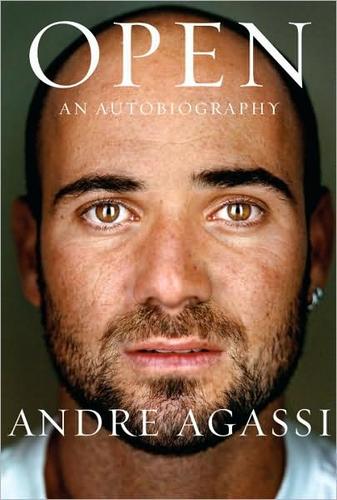
Talk to Open: An Autobiography like its author wrote you back.
Get the ideas that fit your life — not generic summaries.
- Chat with the book
- Audiobook-style main ideas
- Adapts to your life and goals
- Helps you take action
What it argues
Andre Agassi's autobiography opens with one of the most famous confessions in sports memoir: he hates tennis. This is the book's central paradox, and Agassi and his collaborator J. R. Moehringer spend 400 pages exploring it — how a man who never chose his sport, was essentially conscripted into it by a domineering father, and spent years resenting it, managed to become one of its greatest players and eventually find in it something like meaning.
Agassi grew up in Las Vegas, the son of an Iranian immigrant father who had been obsessed with tennis and who decided before Andre's birth that his son would be a tennis champion. The training regime his father imposed was brutal and systematic: a ball machine named "the dragon" that fired 2,500 balls a day, hours of practice before school, a joyless perfectionism that left Agassi feeling that his value was entirely conditional on his performance. He was sent to Nick Bollettieri's tennis academy in Florida as a young teenager, an experience he describes as a combination of boot camp and Lord of the Flies.
What it gets right
- 1.
Intrinsic motivation cannot be manufactured. Agassi's career demonstrates the costs of competing for external validation — his father's approval, public image, rankings — and the transformation that follows genuine purpose.
- 2.
Identity imposed from outside is psychologically corrosive. Agassi did not choose tennis and spent years performing a self he had been assigned rather than one he had built.
- 3.
The body holds the history of performance. Agassi's knees, destroyed by decades of hard court tennis, are a recurring presence — the physical cost of a career that began before his body was ready.
What it covers
Who wrote it
Andre Agassi was born in Las Vegas in 1970 and became one of the most successful and recognizable tennis players of his era, winning eight Grand Slam titles and an Olympic gold medal. He was one of the few players to win all four Grand Slam tournaments during his career. He retired from professional tennis in 2006. His philanthropic work in Las Vegas — particularly the Andre Agassi Foundation for Education and the Andre Agassi College Preparatory Academy, a free charter school — has been his primary focus since retiring. Open was written in collaboration with J. R. Moehringer and published in 2009.
