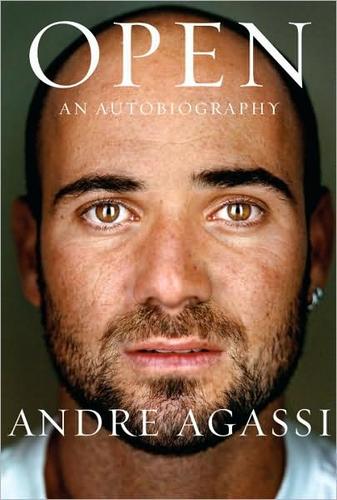
Talk to Open: An Autobiography like its author wrote you back.
Get the ideas that fit your life — not generic summaries.
- Chat with the book
- Audiobook-style main ideas
- Adapts to your life and goals
- Helps you take action
Open: An Autobiography, in detail
Andre Agassi's autobiography opens with one of the most famous confessions in sports memoir: he hates tennis. This is the book's central paradox, and Agassi and his collaborator J. R. Moehringer spend 400 pages exploring it — how a man who never chose his sport, was essentially conscripted into it by a domineering father, and spent years resenting it, managed to become one of its greatest players and eventually find in it something like meaning.
Agassi grew up in Las Vegas, the son of an Iranian immigrant father who had been obsessed with tennis and who decided before Andre's birth that his son would be a tennis champion. The training regime his father imposed was brutal and systematic: a ball machine named "the dragon" that fired 2,500 balls a day, hours of practice before school, a joyless perfectionism that left Agassi feeling that his value was entirely conditional on his performance. He was sent to Nick Bollettieri's tennis academy in Florida as a young teenager, an experience he describes as a combination of boot camp and Lord of the Flies.
The middle section of the book covers Agassi's career at its most self-destructive. He wore a hairpiece on the court for years to conceal early baldness and lived in terror of it falling off. He briefly used crystal methamphetamine during a period of depression in the late 1990s, tested positive for the drug, lied to the ATP, and was cleared on a technicality — a confession that generated enormous controversy when the book was published. He married and divorced Brooke Shields. His ranking fell outside the top hundred. Then, at an age when most tennis players have retired, he rebuilt his game and his motivation.
The rebuilding is the book's emotional climax and its most interesting argument. Agassi began working with children in Las Vegas through his Andre Agassi Foundation and eventually founded a charter school. He met and married Steffi Graf. He found, in the last years of his career, a genuine reason to compete that had nothing to do with his father's demands or his own ego. Open is a sports memoir, but its real subject is the question of how you build a life when the conditions of your formation were not of your choosing.
The big ideas
- 1.
Intrinsic motivation cannot be manufactured. Agassi's career demonstrates the costs of competing for external validation — his father's approval, public image, rankings — and the transformation that follows genuine purpose.
- 2.
Identity imposed from outside is psychologically corrosive. Agassi did not choose tennis and spent years performing a self he had been assigned rather than one he had built.
- 3.
The body holds the history of performance. Agassi's knees, destroyed by decades of hard court tennis, are a recurring presence — the physical cost of a career that began before his body was ready.
