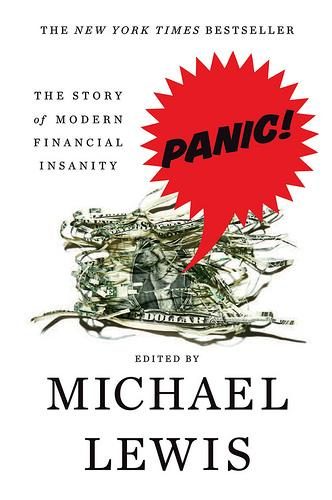
Talk to Panic: The Story of Modern Financial Insanity like its author wrote you back.
Get the ideas that fit your life — not generic summaries.
- Chat with the book
- Audiobook-style main ideas
- Adapts to your life and goals
- Helps you take action
What it argues
Panic is an anthology edited by Michael Lewis, collecting journalism, essays, and firsthand accounts about five major financial crises from 1987 to 2007: the Black Monday crash, the emerging markets panics of the 1990s, the Long-Term Capital Management collapse, the dot-com bust, and the early signals of the subprime mortgage crisis. Lewis is not merely a compiler; he provides brief but sharp introductions to each section that frame the pattern he sees repeating. The book was published in November 2008, weeks after Lehman Brothers failed, which gave it an urgency its prefaces didn't anticipate.
The anthology's value is precisely its breadth. Reading accounts of five separate crises in sequence forces a recognition of recurrence that any single account would obscure. The mechanism is consistent: a new financial instrument or market opportunity creates the impression that risk has been eliminated or transformed into opportunity; sophisticated participants compete to take on more of what seems like costless return; leverage builds; the underlying assumption is revealed as false; collapse is sudden and far larger than anyone expected because the complexity of the system made the actual exposure invisible.
What it gets right
- 1.
Financial crises follow a recognizable pattern: new instruments create the illusion that risk has been eliminated, leverage builds, the assumption fails, and the collapse is larger than anyone expected because the exposure was invisible.
- 2.
Complexity in financial systems is not neutral — it conceals risk by making it impossible to trace where exposure actually sits, which allows it to build past any safe threshold.
- 3.
Herding behavior in markets is not irrational at the individual level; each participant has good reasons to follow the crowd. The collective result is still catastrophic.
What it covers
Who wrote it
Michael Lewis is an American financial journalist and author who began his career as a bond salesman at Salomon Brothers in the 1980s before leaving to write Liar's Poker (1989), which made him famous. He has since written Moneyball, The Blind Side, The Big Short, Flash Boys, Going Infinite, and numerous other books on finance, sports, and government. He has written for Vanity Fair, Bloomberg, and Slate, among other publications. As an editor, Lewis brought to Panic the same sense for narrative and character that animates his own reporting: his introductions to each section are among the best short essays on financial psychology he has written.
