Talk to Pedro Páramo like its author wrote you back.
Get the ideas that fit your life — not generic summaries.
- Chat with the book
- Audiobook-style main ideas
- Adapts to your life and goals
- Helps you take action
Pedro Páramo, in detail
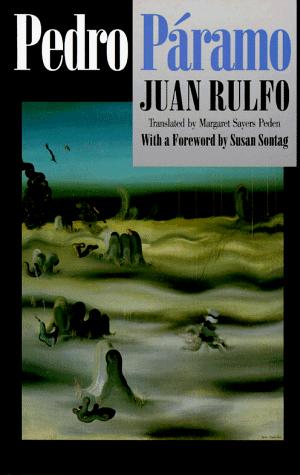
Juan Rulfo's Pedro Páramo is a short novel of extraordinary intensity, barely 120 pages, that many writers — Gabriel García Márquez among them — cite as among the most influential fiction ever written in Spanish. A man named Juan Preciado travels to the ghost town of Comala to find his father, Pedro Páramo, whose name his dying mother gave him as a final request. When he arrives, Comala is populated entirely by the dead — their voices drifting up from the earth, their histories layering over each other — and Juan Preciado realizes he has been dead since not long after he arrived.
The narrative structure is deliberately disorienting: voices shift without announcement, time moves in all directions, characters appear and disappear mid-sentence, and the reader gradually assembles the story of Pedro Páramo — a cacique, a landowner, a tyrant who loved one woman his entire life and destroyed everything else — from fragments. This is not experimental difficulty for its own sake but a formal argument: memory does not narrate; it surfaces. The dead remember in pieces, and Rulfo reproduces that fragmentation with total control.
Pedro Páramo himself is a portrait of the Mexican rural strongman — cruel, total, genuinely feeling in one direction only. His obsessive love for Susana San Juan, whom he acquires only after she is already lost to madness and grief, is the novel's emotional center. The cacique's power is absolute in every domain except the one that matters to him, and this irony Rulfo renders without sentiment.
García Márquez said he read Pedro Páramo and then read it again, and then began One Hundred Years of Solitude. That lineage is visible. But Rulfo's novel is smaller, colder, and more formally pure. It does not comfort with its magic; it uses it to intensify absence. An extraordinary novel that takes two hours to read and weeks to stop thinking about.
The big ideas
- 1.
Rulfo's formal achievement is a narrative composed entirely of fragments — shifting voices, reversed chronology, unmarked transitions — that enacts how memory and death actually work rather than how stories pretend to.
- 2.
Pedro Páramo is the archetype of the Latin American cacique: total power, absolute impunity, capable of genuine feeling in one direction, and genuinely indifferent to human life in every other.
- 3.
Comala is established as a dead town within the first pages, but the revelation that Juan Preciado is also dead reframes the entire novel as a space where the distinction between the living and the dead has dissolved.
