Talk to Permission Marketing like its author wrote you back.
Get the ideas that fit your life — not generic summaries.
- Chat with the book
- Audiobook-style main ideas
- Adapts to your life and goals
- Helps you take action
Permission Marketing, in detail
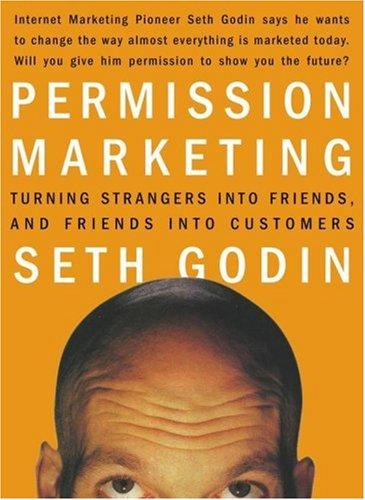
Permission Marketing is Seth Godin's 1999 manifesto arguing that the dominant marketing model — interruption, buying attention, broadcasting to audiences who didn't ask — is fundamentally broken and becoming more broken. Published before social media and before the full rise of email marketing, the book anticipated the attention scarcity problem that would define digital marketing over the next two decades.
The core contrast is between interruption marketing — the model of traditional advertising, which interrupts people with messages they didn't ask for — and permission marketing, which earns the right to communicate with people who have opted in. Permission marketing is anticipated, personal, and relevant: customers expect to hear from you, the message is specific to them, and it is relevant to their current situation. Interruption marketing is unanticipated, impersonal, and often irrelevant.
Godin argues that building a permission asset — an audience that has consented to hear from you — is one of the most valuable things a business can do, because it creates a direct channel to customers that doesn't require buying attention every time you have something to say. The permission asset is also durable: it survives changes in advertising platforms and media environments. But permission is fragile — it can be revoked when you send something irrelevant or unexpected, and it must be maintained through consistent delivery of genuine value.
Published in 1999, the book is sometimes labeled as the intellectual foundation for email marketing. That framing undersells it. The permission framework applies to any channel where customer consent creates the relationship: email, push notifications, content subscriptions, community membership. Read in 2026, the book feels both prescient — the attention scarcity Godin identified has only intensified — and in some ways superseded by the practical mechanics of modern permission marketing, which have become far more sophisticated than the book describes.
The big ideas
- 1.
Interruption marketing is dying because attention is increasingly scarce and people have developed effective defenses against unwanted marketing messages.
- 2.
Permission marketing earns the right to communicate with customers who have opted in. The messages are anticipated, personal, and relevant — the opposite of broadcast advertising.
- 3.
A permission asset — an audience that has consented to hear from you — is one of the most durable competitive advantages a business can build, because it doesn't depend on buying attention every time.
