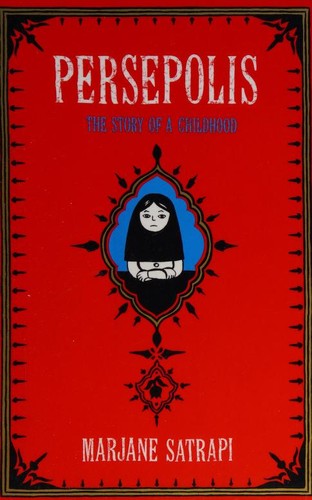
Talk to Persepolis: The Story of a Childhood like its author wrote you back.
Get the ideas that fit your life — not generic summaries.
- Chat with the book
- Audiobook-style main ideas
- Adapts to your life and goals
- Helps you take action
What it argues
Persepolis is Marjane Satrapi's graphic memoir of growing up in Tehran during and after the 1979 Islamic Revolution. Originally published in French in two volumes, it was collected into a single English edition in 2003. Satrapi narrates the story as a child and then a young teenager, using the flat, high-contrast black-and-white visual style to render both the domestic intimacy of her family and the increasingly repressive political world closing around them.
Satrapi's family is secular and leftist, educated and cosmopolitan. Her parents and her grandmother model for her a sense that the revolution was supposed to mean liberation — and then watch as the Islamic government dismantles the freedoms they imagined they were fighting for. The book is honest about the appeal of revolutionary idealism and about how quickly idealism curdles into authoritarian control. It's also funny in places, in the way that involves laughing at the absurdity of bureaucratic ideology applied to ordinary life.
What it gets right
- 1.
The graphic memoir form can carry political weight that text alone sometimes cannot. Satrapi's visual style is not decorative — it's structural, rendering repression and childhood naivety simultaneously.
- 2.
Revolutionary idealism and authoritarian outcomes are not separate phenomena. Persepolis shows how quickly the promise of liberation becomes its opposite when ideology is fused with state power.
- 3.
A child's perspective on political upheaval is not naive — it's clarifying. Children register the emotional atmosphere of political change with accuracy, even when they lack the vocabulary to name it.
What it covers
Who wrote it
Marjane Satrapi was born in Rasht, Iran in 1969 and grew up in Tehran. After being sent to Vienna by her parents as a teenager, she later returned to Iran and eventually emigrated to France, where she studied art and began her career as an illustrator and author. Persepolis, first published in French in 2000–2003, became an international phenomenon, adapted into an animated film in 2007 that won the Jury Prize at Cannes. She has written several other graphic works and directed films. She lives in Paris.
