Persepolis: The Story of a Childhood by Marjane Satrapi is a 2003 memoir book about revolution, identity, coming-of-age. The graphic memoir form can carry political weight that text alone sometimes cannot. Satrapi's visual style is not decorative — it's structural, rendering repression and childhood naivety simultaneously.
Summary
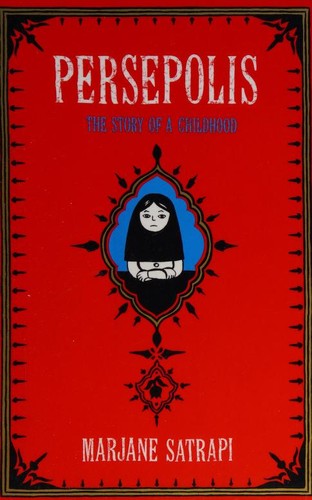
Persepolis is Marjane Satrapi's graphic memoir of growing up in Tehran during and after the 1979 Islamic Revolution. Originally published in French in two volumes, it was collected into a single English edition in 2003. Satrapi narrates the story as a child and then a young teenager, using the flat, high-contrast black-and-white visual style to render both the domestic intimacy of her family and the increasingly repressive political world closing around them.
Satrapi's family is secular and leftist, educated and cosmopolitan. Her parents and her grandmother model for her a sense that the revolution was supposed to mean liberation — and then watch as the Islamic government dismantles the freedoms they imagined they were fighting for. The book is honest about the appeal of revolutionary idealism and about how quickly idealism curdles into authoritarian control. It's also funny in places, in the way that involves laughing at the absurdity of bureaucratic ideology applied to ordinary life.
The child narrator is the book's central device. Marji sees the world with partial comprehension — she understands enough to be frightened but not always enough to understand why. This gap between what she witnesses and what she can fully process creates much of the book's emotional force. It also allows Satrapi to show how ideology penetrates childhood: the curriculum that suddenly changes, the veils that appear in school, the friends whose families are jailed or executed.
Persepolis ends with Satrapi's parents sending her to Vienna as a teenager for her safety. The sequel, Persepolis 2, continues the story. As a standalone volume, the first book captures a specific historical moment — the years when Iran moved from one form of authoritarianism to another — through one family's experience of it, and does so in a form that is accessible without being simplistic.
Talk to Persepolis: The Story of a Childhood like its author wrote you back.
Get the ideas that fit your life — not generic summaries.
- Chat with the book
- Audiobook-style main ideas
- Adapts to your life and goals
- Helps you take action
Key takeaways
- 1.
The graphic memoir form can carry political weight that text alone sometimes cannot. Satrapi's visual style is not decorative — it's structural, rendering repression and childhood naivety simultaneously.
- 2.
Revolutionary idealism and authoritarian outcomes are not separate phenomena. Persepolis shows how quickly the promise of liberation becomes its opposite when ideology is fused with state power.
- 3.
A child's perspective on political upheaval is not naive — it's clarifying. Children register the emotional atmosphere of political change with accuracy, even when they lack the vocabulary to name it.
- 4.
Family is the unit through which history becomes personal. Satrapi's parents and grandmother are as central to the story as the Revolution itself.
- 5.
Cultural identity under theocratic pressure is both a daily negotiation and an act of resistance. The punk cassettes, the Western clothes, the conversations held in private all accumulate into a coherent refusal.
- 6.
Exile — even exile chosen by parents for a child's protection — is its own form of loss. Satrapi's departure for Vienna is presented with grief, not relief.
- 7.
The universality of the book is not despite its specificity but because of it. The details of Tehran in 1979–1984 ground the larger questions it raises about power, identity, and survival.
Discussion questions
Use these on your own, with a book club, or as chat starters in Superbook. Book club version, ready to copy or print →
- 1.
Satrapi uses a child narrator to tell a political story. What does that choice let her do that an adult narrator couldn't?
- 2.
How does the graphic form — the black-and-white images, the flat style — shape what the book can communicate? Would the same material work as straightforward prose?
- 3.
Satrapi's family is secular and politically engaged. How does their worldview influence what she sees and values? What might the story look like from a different family's perspective?
- 4.
The book shows ordinary people navigating survival under an increasingly repressive government. What different strategies do different characters use, and what costs do those strategies carry?
- 5.
Marji's relationship with her grandmother is central to the book's moral framework. What values does the grandmother embody, and how do they conflict with the world the state is trying to create?
- 6.
The humor in Persepolis is unexpected. Find a moment that struck you as darkly funny — what is Satrapi doing by allowing that tone in this subject matter?
- 7.
At several points, Marji holds contradictory ideas at the same time — admiring rebels and also fearing what they unleash. How does the book handle that kind of moral ambiguity?
- 8.
Why do you think Satrapi chose to end volume one with her departure for Vienna rather than earlier or later in the timeline?
- 9.
How does Persepolis complicate Western stereotypes about Iran and Iranians? What does it show that conventional news coverage of the Revolution typically missed?
- 10.
The book is a memoir, but Satrapi was drawing it years after the events. How much do you think the adult author is shaping what the child character notices and understands?
- 11.
What would you want to ask Satrapi about what she left out of the book?
Themes
Frequently asked questions
-
Is Persepolis worth reading?
Yes. It's one of the rare books that is both historically informative and genuinely moving, and the graphic form makes it accessible to readers who don't normally read memoir. Even people who know the broad outlines of Iranian history will find the domestic, close-range perspective clarifying.
-
How long does it take to read Persepolis?
Around two hours for the complete graphic novel. The visual format moves faster than prose. Many readers sit with pages longer than strictly necessary, which is appropriate — the images reward attention.
-
Is Persepolis a graphic novel or a memoir?
Both. It is a graphic memoir — an autobiographical work told in comics form. Satrapi insists on its accuracy as personal history rather than fiction, and the specific dates and political events are real.
-
Who should read Persepolis?
Anyone curious about the Iranian Revolution and its human cost, readers interested in graphic literature as a form, and anyone navigating questions about identity, exile, or coming-of-age under authoritarian conditions. It is frequently assigned in high school and university courses across history, literature, and political science.
-
What is the sequel to Persepolis?
Persepolis 2 continues Satrapi's story from her arrival in Vienna through her years in Europe and eventual return to Iran. Many editions now publish both volumes together. The second volume is equally recommended.
Similar books
Reading Lolita in Tehran: A Memoir in Books
Azar Nafisi
The Woman Warrior: Memoirs of a Girlhood Among Ghosts
Maxine Hong Kingston
The Diary of a Young Girl
Anne Frank
Born a Crime: Stories from a South African Childhood
Trevor Noah
