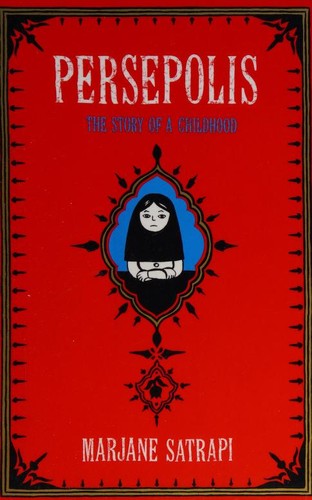
Talk to Persepolis: The Story of a Childhood like its author wrote you back.
Get the ideas that fit your life — not generic summaries.
- Chat with the book
- Audiobook-style main ideas
- Adapts to your life and goals
- Helps you take action
Persepolis: The Story of a Childhood, in detail
Persepolis is Marjane Satrapi's graphic memoir of growing up in Tehran during and after the 1979 Islamic Revolution. Originally published in French in two volumes, it was collected into a single English edition in 2003. Satrapi narrates the story as a child and then a young teenager, using the flat, high-contrast black-and-white visual style to render both the domestic intimacy of her family and the increasingly repressive political world closing around them.
Satrapi's family is secular and leftist, educated and cosmopolitan. Her parents and her grandmother model for her a sense that the revolution was supposed to mean liberation — and then watch as the Islamic government dismantles the freedoms they imagined they were fighting for. The book is honest about the appeal of revolutionary idealism and about how quickly idealism curdles into authoritarian control. It's also funny in places, in the way that involves laughing at the absurdity of bureaucratic ideology applied to ordinary life.
The child narrator is the book's central device. Marji sees the world with partial comprehension — she understands enough to be frightened but not always enough to understand why. This gap between what she witnesses and what she can fully process creates much of the book's emotional force. It also allows Satrapi to show how ideology penetrates childhood: the curriculum that suddenly changes, the veils that appear in school, the friends whose families are jailed or executed.
Persepolis ends with Satrapi's parents sending her to Vienna as a teenager for her safety. The sequel, Persepolis 2, continues the story. As a standalone volume, the first book captures a specific historical moment — the years when Iran moved from one form of authoritarianism to another — through one family's experience of it, and does so in a form that is accessible without being simplistic.
The big ideas
- 1.
The graphic memoir form can carry political weight that text alone sometimes cannot. Satrapi's visual style is not decorative — it's structural, rendering repression and childhood naivety simultaneously.
- 2.
Revolutionary idealism and authoritarian outcomes are not separate phenomena. Persepolis shows how quickly the promise of liberation becomes its opposite when ideology is fused with state power.
- 3.
A child's perspective on political upheaval is not naive — it's clarifying. Children register the emotional atmosphere of political change with accuracy, even when they lack the vocabulary to name it.
