Talk to Piranesi like its author wrote you back.
Get the ideas that fit your life — not generic summaries.
- Chat with the book
- Audiobook-style main ideas
- Adapts to your life and goals
- Helps you take action
What it argues
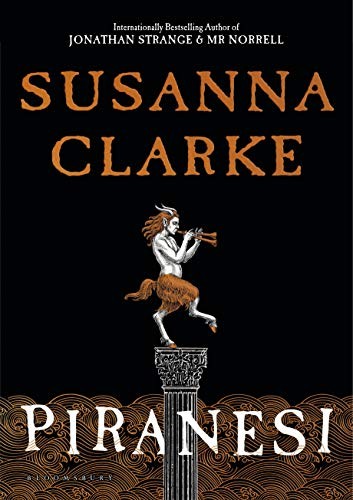
Piranesi is structured as the journal of a man who calls himself Piranesi, living in a House that contains the world: a vast and apparently infinite series of halls filled with marble statues, where the tides come in twice a day and the skies are visible through the upper floors. Piranesi has no memory of how he arrived, no knowledge of what his name was before, and no sense that anything is wrong. He feeds himself on fish and dried seaweed, tracks the behavior of the tides, names the statues, and buries the dead he occasionally discovers. His only human contact is with a man he calls the Other, who visits twice a week to discuss their shared interest in a mythological theory about ancient knowledge embedded in the House.
The novel is structured as a mystery, and readers will solve it at a different pace than Piranesi does — part of the pleasure and the horror is watching a man systematically dismantled come back together, without knowing he was dismantled, without knowing that the damage is ongoing. What initially reads as world-building — the description of the House, its halls, its statues, its tides — gradually reveals itself as a portrait of captivity and psychological manipulation, and the shift from wonder to dread is managed with exceptional precision.
What it gets right
- 1.
The House is both setting and character — Clarke's achievement is making a non-human space feel fully inhabited and specific, with its own weather, ecology, and emotional logic.
- 2.
The gap between what Piranesi knows and what the reader gradually suspects is managed with unusual care — the novel rewards re-reading the early sections after finishing.
- 3.
Memory is not just information. Losing it is losing selfhood, and Piranesi's recovery is not just cognitive but existential — a reconstruction of who he is, not just what happened.
What it covers
Who wrote it
Susanna Clarke is a British author born in Nottingham in 1967. Her debut novel, Jonathan Strange and Mr Norrell, published in 2004 after ten years of writing, became an international bestseller and won the Hugo Award and the World Fantasy Award. Ill health — a condition involving severe fatigue and cognitive disruption — kept her from publishing for sixteen years. Piranesi, published in 2020, was written in part during that period and drew on her experience of isolation and altered cognition. It won the Women's Prize for Fiction in 2021. She lives in Cambridge, England.
