Talk to Pound Foolish like its author wrote you back.
Get the ideas that fit your life — not generic summaries.
- Chat with the book
- Audiobook-style main ideas
- Adapts to your life and goals
- Helps you take action
What it argues
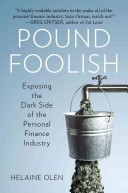
Helaine Olen's Pound Foolish is a sustained critique of the personal finance industry — its bestselling authors, its television personalities, its seminars, and the underlying ideology that suggests individual financial decisions are primarily responsible for financial security or its absence. Olen, a journalist who had previously written a personal finance column herself, turned against the genre after interviewing its gurus and examining the evidence behind their claims.
The book targets specific figures, most prominently Suze Orman and David Bach, analyzing their advice against the actual financial outcomes of the people who follow it. Olen's core argument is that personal finance advice systematically overstates how much individual behavior can compensate for structural problems — stagnant wages, rising housing costs, healthcare costs, and a financial system that extracted enormous value from ordinary people through complex products and hidden fees. The latte factor, for instance, suggests that giving up small daily luxuries can produce significant wealth. Olen shows that the math works only if you ignore that the savings are too small to matter against the scale of the real financial problems most Americans face.
What it gets right
- 1.
Personal finance advice systematically attributes financial insecurity to individual behavior while downplaying structural factors: stagnant wages, healthcare costs, housing, and financial system complexity.
- 2.
The 'latte factor' and similar advice is mathematically trivial against the scale of real financial problems. Small savings compound only if the underlying income and expense structure permits accumulation.
- 3.
The shift from defined benefit pensions to 401(k) plans transferred investment risk to individuals while creating a lucrative fee structure for financial services firms.
What it covers
Who wrote it
Helaine Olen is an American journalist and author who spent years writing about personal finance before becoming one of its most prominent critics. Her work has appeared in the Washington Post, Slate, the Guardian, and numerous other publications. Pound Foolish, her first book, grew out of her research into the gap between the promises of the personal finance industry and the financial realities of most Americans. She has continued to write about economic inequality, financial regulation, and consumer protection. She holds no financial licenses and accepts no financial industry advertising or sponsorship in her journalism.
