Talk to Presumed Innocent like its author wrote you back.
Get the ideas that fit your life — not generic summaries.
- Chat with the book
- Audiobook-style main ideas
- Adapts to your life and goals
- Helps you take action
What it argues
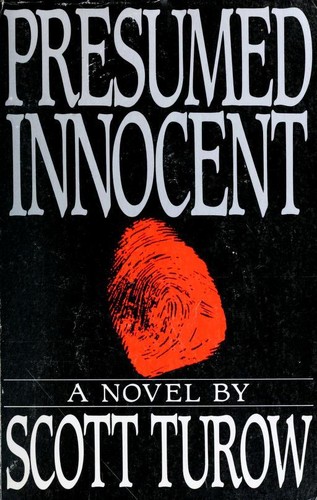
Rusty Sabich is the chief deputy prosecutor in a fictional Midwestern city, a competent, serious man trusted by his boss and respected by his colleagues. Then his colleague and ex-lover, Carolyn Polhemus, is found murdered. Because Rusty investigated the case briefly before recusing himself, and because his boss has reasons to destroy him, Rusty is charged with the murder. The novel is told entirely in his voice, from the position of a man who knows how the system works and is watching it turn on him.
Turow is a practicing attorney who wrote Presumed Innocent while commuting by train to his Chicago law firm, and the novel has the procedural texture of someone who actually knows what a murder trial looks like from the inside. The courtroom scenes are precise — cross-examinations that reveal and conceal simultaneously, evidentiary rulings that matter, witnesses who lie in ways that prosecutors know about and can't use. But the legal accuracy is in service of something more interesting: a study of the gap between what courts determine and what actually happened.
What it gets right
- 1.
Turow distinguishes between legal guilt — what the system can prove — and moral guilt — what actually happened — and refuses to treat them as identical.
- 2.
Rusty Sabich is our narrator, which means we have access to everything he remembers and nothing he conceals. The novel depends entirely on how much you trust him.
- 3.
The courtroom in this novel is a theater where lawyers construct competing fictions for the jury — not a mechanism for finding truth.
What it covers
Who wrote it
Scott Turow is an American author and attorney who has practiced law in Chicago for more than four decades, including as a federal prosecutor. He wrote Presumed Innocent while commuting by train and published it in 1987 to instant critical and commercial success, essentially inventing the serious literary legal thriller as a genre. His subsequent novels include The Burden of Proof, Pleading Guilty, Personal Injuries, and Innocent, a sequel to Presumed Innocent published in 2010. He has also written about his own experiences in the legal system, including One L, a memoir of his first year at Harvard Law School.
