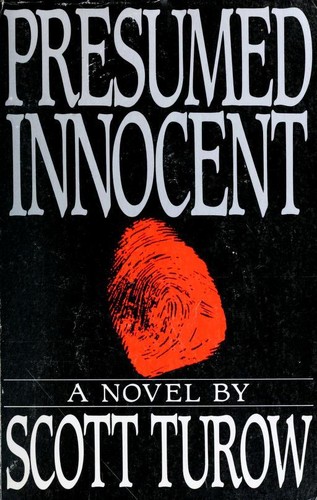
Presumed Innocent by Scott Turow is a 1987 thriller book about guilt and innocence, institutional betrayal, obsession and desire. Turow distinguishes between legal guilt — what the system can prove — and moral guilt — what actually happened — and refuses to treat them as identical.
Summary
Rusty Sabich is the chief deputy prosecutor in a fictional Midwestern city, a competent, serious man trusted by his boss and respected by his colleagues. Then his colleague and ex-lover, Carolyn Polhemus, is found murdered. Because Rusty investigated the case briefly before recusing himself, and because his boss has reasons to destroy him, Rusty is charged with the murder. The novel is told entirely in his voice, from the position of a man who knows how the system works and is watching it turn on him.
Turow is a practicing attorney who wrote Presumed Innocent while commuting by train to his Chicago law firm, and the novel has the procedural texture of someone who actually knows what a murder trial looks like from the inside. The courtroom scenes are precise — cross-examinations that reveal and conceal simultaneously, evidentiary rulings that matter, witnesses who lie in ways that prosecutors know about and can't use. But the legal accuracy is in service of something more interesting: a study of the gap between what courts determine and what actually happened.
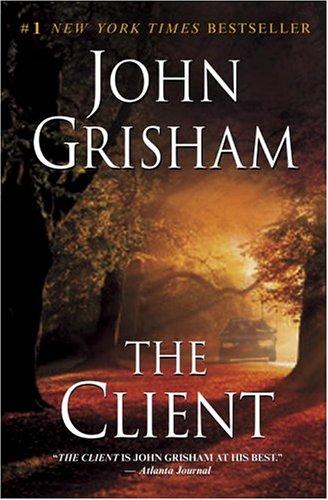
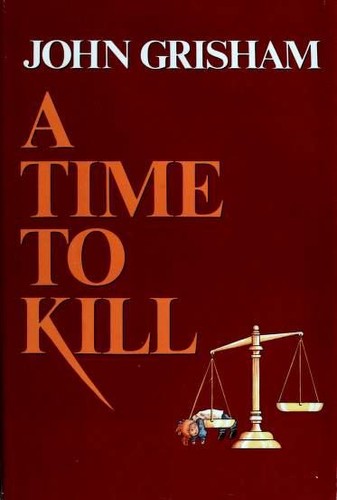
The novel was the template for a generation of legal thrillers, including much of what Grisham wrote afterward, and it surpasses most of them in psychological depth. Rusty is not simply a wrongly accused man — he is a man who has done things he is not proud of, who is attached to a woman who did not love him, and whose guilt in the moral sense is separate from his guilt in the legal sense. The ambiguity the novel maintains about what actually happened is not a gimmick; it is the point.
The twist ending is one of the most discussed in legal fiction and has divided readers since the book's publication. Some find it devastating; others find it manipulative. Both responses are defensible. What is not in dispute is that Turow is the most technically proficient writer the legal thriller genre has produced, and that this first novel remains his masterwork. Read it for the trial, stay for the final pages.
Talk to Presumed Innocent like its author wrote you back.
Get the ideas that fit your life — not generic summaries.
- Chat with the book
- Audiobook-style main ideas
- Adapts to your life and goals
- Helps you take action
Key takeaways
- 1.
Turow distinguishes between legal guilt — what the system can prove — and moral guilt — what actually happened — and refuses to treat them as identical.
- 2.
Rusty Sabich is our narrator, which means we have access to everything he remembers and nothing he conceals. The novel depends entirely on how much you trust him.
- 3.
The courtroom in this novel is a theater where lawyers construct competing fictions for the jury — not a mechanism for finding truth.
- 4.
The novel's treatment of Carolyn Polhemus — the dead woman — as a complex, flawed person rather than a victim-symbol is unusual for the genre.
- 5.
Rusty's marriage to Barbara is the novel's dark twin to the murder plot; both involve concealment, and both come due at the end.
- 6.
The legal detail is genuinely accurate and genuinely load-bearing — Turow uses procedure to show how the same facts can be arranged into entirely different stories.
- 7.
The ending, which reveals what actually happened, changes the meaning of everything that came before. Whether that's a trick or a structural achievement is the novel's lasting question.
- 8.
Presumed Innocent is where the literary legal thriller begins — it showed that genre fiction could be psychologically serious without sacrificing narrative drive.
Discussion questions
Use these on your own, with a book club, or as chat starters in Superbook. Book club version, ready to copy or print →
- 1.
Rusty is our only narrator. By the end, how much do you trust him? Did your level of trust change, and when?
- 2.
Turow maintains ambiguity about Rusty's guilt until very late. Does that ambiguity function as suspense, as psychology, or as a philosophical argument about knowledge?
- 3.
The twist ending is controversial. Does it feel earned by the novel's setup, or does it feel like Turow pulling a trick?
- 4.
Carolyn Polhemus is the murder victim, but she's also a fully realized character. How does Turow's treatment of her compare to how women are typically handled in crime fiction?
- 5.
Rusty's obsession with Carolyn is presented as real but not admirable. Is he a sympathetic character? Does the novel want you to sympathize with him?
- 6.
The legal system in this novel determines an outcome. Is that outcome justice? Does Turow want you to feel the difference between the two?
- 7.
Barbara Sabich is nearly invisible for most of the novel and then central at the end. Did that feel inevitable looking back, or contrived?
- 8.
The novel argues, in effect, that the courtroom is a theater where lawyers compete rather than a machine for finding truth. Do you agree with that characterization?
- 9.
Rusty's boss uses the prosecution partly for political reasons. How does that motive change the moral valence of what happens to Rusty?
- 10.
If you were on the jury in this novel, with only the evidence presented at trial, what would you have decided?
- 11.
How does this compare to Grisham's legal thrillers in terms of what it asks of the reader? What does Turow do that Grisham doesn't?
- 12.
The novel was published in 1987. How does the legal world Turow depicts compare to your sense of how courts actually work today?
Themes
Frequently asked questions
-
Is Presumed Innocent worth reading?
Yes — it's the most psychologically serious legal thriller in the genre and arguably the best. The courtroom detail is accurate, the narrator is genuinely unreliable in interesting ways, and the ending is one of the most debated in crime fiction. If you like the genre at all, this is essential.
-
Is the ending a twist or a structural achievement?
It's both, and which word you use depends on how you experienced it. Turow plants the information necessary to understand the ending throughout the novel, which means it's technically fair. Whether it feels earned or manipulative is the question readers argue about.
-
Is there a film adaptation?
Yes — the 1990 film with Harrison Ford is a faithful adaptation and one of Ford's best performances. It handles the ending correctly. Worth watching, though the novel has more interior texture.
-
How does this compare to Grisham?
Turow is more literary and psychologically complex; Grisham is faster and more plot-driven. Presumed Innocent is the better novel; The Firm and The Pelican Brief are more immediate pleasures. Both rewards are real.
-
Who shouldn't read this book?
Readers who want fast-paced action or clear-cut moral alignment will find this novel slow and unsettling. The courtroom scenes are detailed, the narrator is compromised, and the ending refuses comfort. If you want a thriller that reassures you, look elsewhere.