Classics · Book club
Pride and Prejudice book club questions
Here are 12 book club questions for Pride and Prejudice by Jane Austen, ordered to open easily and end somewhere worth arguing about. Copy them, print them, or bring them up one at a time.
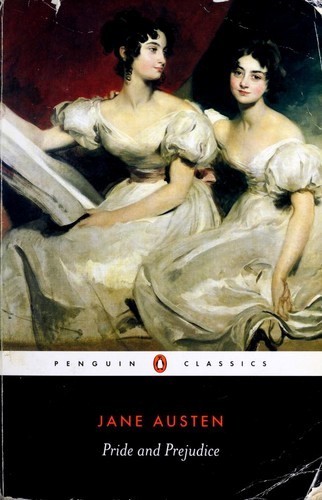
Pride and Prejudice opens with one of the most famous sentences in English literature and immediately establishes its ironic mode: a truth universally acknowledged turns out to be a social pressure universally imposed.
Jane Austen · 1813 · 8h 15m
Full summary and key takeaways →The 12 questions
- 1.
Elizabeth prides herself on her judgment of character. At what point in the novel does she realize that pride has been her own blind spot, and how does Austen stage that recognition?
- 2.
Mr. Darcy's first proposal is one of the great blunders in fiction. Do you read it as arrogance, social ineptitude, or something more understandable given his world? Does the novel excuse him?
- 3.
Mrs. Bennet is easy to dismiss as comic relief. But the novel shows she understands the family's financial precarity more acutely than most. Does she deserve more credit than she gets?
- 4.
Charlotte Lucas accepts Mr. Collins. Elizabeth can't forgive it; Charlotte is completely clear-eyed about her reasons. Whose position does the novel ultimately endorse?
- 5.
Wickham is convincing to almost everyone, including the reader on first encounter. What does that say about charm as a social weapon, and about how we evaluate character?
- 6.
The novel ends with two successful marriages and several unsuccessful ones to compare. What does Austen seem to think constitutes a good marriage?
- 7.
Lydia's elopement is treated as a catastrophe even though it ends in marriage. Is the novel's judgment on Lydia fair, given that she has been offered no real education or alternatives?
- 8.
Darcy's transformation from contemptuous to genuinely admiring is central to the plot. Do you find it believable? What would it take for a man of his upbringing to change that much?
- 9.
The novel is set entirely among the landed gentry. How much of its moral framework is specific to that world, and how much transfers to contemporary life?
- 10.
How does the novel treat the relationship between money and love? Does it argue they can coexist, or that the ideal (Elizabeth and Darcy) is the exception that proves the rule?
- 11.
Jane Bennet believes the best of everyone. Elizabeth is more skeptical. The novel seems to value both qualities but also to critique both. How do you read that balance?
- 12.
Austen never wrote about war, politics, or labor, even as all three surrounded her. Is that a limitation of the novel, a deliberate scope choice, or both?
How to run the discussion
- Pick six to eight, not all of them. An hour of real discussion covers fewer questions than anyone expects, and racing the list is what makes a book club feel like homework.
- Open with what people noticed, not what they concluded. Asking for a verdict first hardens opinions before anyone has heard each other.
- Let the disagreement run. The questions below that split a room are the ones worth the time; the ones everyone answers the same way can be skipped.
- Ask the quiet person a specific question. A direct, narrow question is far easier to answer than an open invitation to contribute.
Themes worth steering toward
If the conversation stalls, these are the threads that usually restart it.
Common questions
What are good book club questions for Pride and Prejudice?
Here are 12 book club questions for Pride and Prejudice by Jane Austen, ordered to open easily and end somewhere worth arguing about. The strongest openers ask what each reader noticed rather than what they concluded, and the discussion usually turns on marriage and social pressure, class and status, pride and self-deception.
How long should a book club discussion of Pride and Prejudice last?
Most groups run 60 to 90 minutes of actual discussion. That is roughly six to eight questions, not all of them, so pick the ones that suit your group rather than working down the list in order.
What are the main themes in Pride and Prejudice?
Marriage and social pressure, Class and status, Pride and self-deception, Female independence, First impressions. Those are the threads most likely to divide a room, which makes them the useful places to steer a discussion that has gone quiet.
Picking the next one? See books like Pride and Prejudice or questions for other book club picks.
