Psychology · Book club
Quiet: The Power of Introverts in a World That Can't Stop Talking book club questions
Here are 12 book club questions for Quiet: The Power of Introverts in a World That Can't Stop Talking by Susan Cain, ordered to open easily and end somewhere worth arguing about. Copy them, print them, or bring them up one at a time.
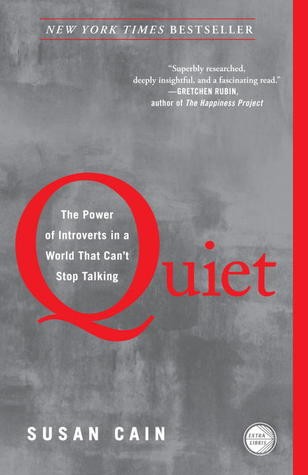
Quiet is Susan Cain's argument that Western culture — and American culture in particular — has built itself around an "Extrovert Ideal" that systematically undervalues roughly a third to a half of the population.
Susan Cain · 2012 · 6h 0m
Full summary and key takeaways →The 12 questions
- 1.
Cain argues that the Extrovert Ideal shapes how we evaluate intelligence and leadership. Where have you seen this play out in a school, workplace, or social setting you know well?
- 2.
Do you identify as an introvert, extrovert, or somewhere in between? Has that changed across different phases of your life or in different contexts?
- 3.
Cain distinguishes introversion from shyness. Did that distinction change how you think about yourself or someone you know?
- 4.
Think of a time you acted out of character for a goal that mattered. What made it possible, and what did it cost you afterward?
- 5.
What is your restorative niche? Do you protect it deliberately, or does it get squeezed out by social or professional demands?
- 6.
Cain points to research showing brainstorming sessions often produce worse ideas than individuals working alone. Does that match your experience? How does your workplace handle solitary versus collaborative work?
- 7.
The book argues that open offices prioritize the appearance of collaboration over actual productivity. What would a workspace designed around both personality types look like?
- 8.
Cain describes introverted leaders who listen carefully and resist the urge to dominate. Who in your own experience has led that way, and how did it land with the team?
- 9.
How much of your social performance — the times you act more extroverted than you feel — is chosen, and how much is pressure you haven't examined?
- 10.
Cain argues that Asian cultures often value a more reflective, less assertive public style, and that this creates real friction for Asian-American students in American classrooms. What other cultural collisions around introversion and extroversion have you noticed?
- 11.
If you were raising a highly introverted child, what would you want their school to do differently? What would you do differently as a parent?
- 12.
The book's central weakness, some critics argue, is that it overstates a binary. Do you think introversion and extroversion are real, stable categories, or is the spectrum too wide for the labels to be useful?
How to run the discussion
- Pick six to eight, not all of them. An hour of real discussion covers fewer questions than anyone expects, and racing the list is what makes a book club feel like homework.
- Open with what people noticed, not what they concluded. Asking for a verdict first hardens opinions before anyone has heard each other.
- Let the disagreement run. The questions below that split a room are the ones worth the time; the ones everyone answers the same way can be skipped.
- Ask the quiet person a specific question. A direct, narrow question is far easier to answer than an open invitation to contribute.
Themes worth steering toward
If the conversation stalls, these are the threads that usually restart it.
Common questions
What are good book club questions for Quiet: The Power of Introverts in a World That Can't Stop Talking?
Here are 12 book club questions for Quiet: The Power of Introverts in a World That Can't Stop Talking by Susan Cain, ordered to open easily and end somewhere worth arguing about. The strongest openers ask what each reader noticed rather than what they concluded, and the discussion usually turns on introversion, temperament, social dynamics.
How long should a book club discussion of Quiet: The Power of Introverts in a World That Can't Stop Talking last?
Most groups run 60 to 90 minutes of actual discussion. That is roughly six to eight questions, not all of them, so pick the ones that suit your group rather than working down the list in order.
What are the main themes in Quiet: The Power of Introverts in a World That Can't Stop Talking?
Introversion, Temperament, Social dynamics, Creativity, Leadership, Sensitivity. Those are the threads most likely to divide a room, which makes them the useful places to steer a discussion that has gone quiet.
Picking the next one? See books like Quiet: The Power of Introverts in a World That Can't Stop Talking or questions for other book club picks.
