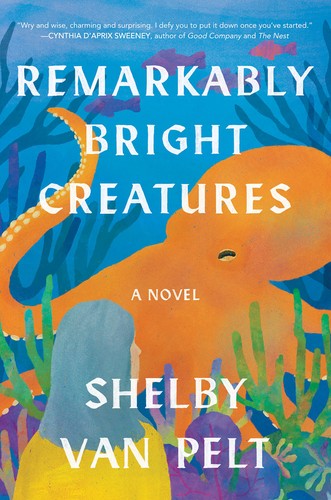
Talk to Remarkably Bright Creatures like its author wrote you back.
Get the ideas that fit your life — not generic summaries.
- Chat with the book
- Audiobook-style main ideas
- Adapts to your life and goals
- Helps you take action
Remarkably Bright Creatures, in detail
Marcellus is a giant Pacific octopus living in the Sowell Bay Aquarium. He observes the staff, the visitors, and the aquarium's systems with the kind of patient, lateral intelligence his species is documented to possess — and, in the novel, narrates chapters from his perspective with dry, precise wit. Tova Sullivan, the overnight cleaning woman, develops a relationship with him. She is seventy-something, recently widowed, methodical, and quietly devastated by the thirty-year-old disappearance of her son Erik. Cameron Cassmore, young and drifting, arrives in Sowell Bay looking for something he can't quite name. These three trajectories converge.
Remarkably Bright Creatures is easier to describe by what it isn't than what it is. It isn't coy about Marcellus's chapters — the octopus narration is played straight and earnestly, with genuine personality behind it. It isn't a mystery novel, though there is a missing person at its center. It isn't grief literature in the heavy, deliberate mode; the grief is present throughout but the book maintains an unlikely lightness that comes partly from Marcellus's perspective and partly from the warmth Shelby Van Pelt clearly feels for her characters.
Van Pelt's prose is accessible and moves quickly, with the aquarium setting used to ground the novel in consistent, vivid atmosphere. The resolution of the family mystery is signaled earlier than the narrative pretends, which some readers will find satisfying (confirmation of a sense they had) and others will find too neat. The book doesn't ask hard questions about animal captivity — Marcellus is content enough at the aquarium that the novel sidesteps the ethical complications his situation actually raises.
This is fundamentally comfort fiction that uses unconventional architecture. The octopus POV is the structural gambit that turned a quiet novel about an elderly widow's grief into a word-of-mouth phenomenon. It works because Marcellus is genuinely well-rendered — scientifically grounded in what octopuses actually do, emotionally resonant in ways the reader is invited to project. Readers who want unsentimental realism or literary challenge will bounce off it. Readers who want warmth, intelligence, and a story that ends well should be more than satisfied.
The big ideas
- 1.
The octopus narrator is the novel's central formal innovation: chapters from Marcellus's perspective are written with genuine specificity about octopus cognition, then extended into personality and observation.
- 2.
Tova's grief for her missing son is the novel's emotional core, and Van Pelt is patient with it — thirty years of quiet devastation rendered with more restraint than sentimentality.
- 3.
The found-family structure, familiar from a lot of contemporary fiction, works here because the unlikely connection between Tova and the aquarium creatures feels earned rather than forced.
