Business · Book club
Remote: Office Not Required book club questions
Here are 11 book club questions for Remote: Office Not Required by Jason Fried and David Heinemeier Hansson, ordered to open easily and end somewhere worth arguing about. Copy them, print them, or bring them up one at a time.
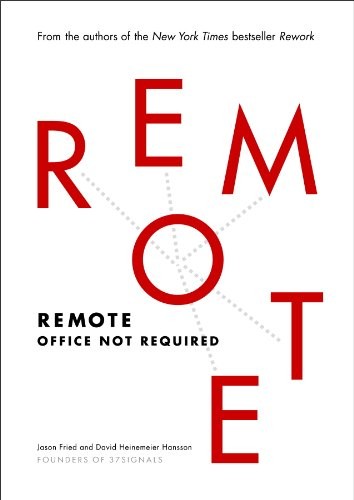
Remote was published in 2013, years before the pandemic forced the question on most organizations.
Jason Fried and David Heinemeier Hansson · 2013 · 3h 45m
Full summary and key takeaways →The 11 questions
- 1.
Fried and DHH argue that offices are full of productivity-destroying interruptions. Does your experience in offices match that diagnosis?
- 2.
What assumptions does your current organization make about physical presence that have never been explicitly tested?
- 3.
Remote shifts performance evaluation from presence to output. For your role, what would measuring by output actually look like in practice?
- 4.
The book argues for asynchronous communication as a default. What decisions in your work genuinely require real-time discussion, and which ones only feel like they do?
- 5.
What do you lose in a remote environment that you can't easily replace? Is it structural to remote work or a symptom of doing it badly?
- 6.
The authors push back on surveillance tools for remote workers. How much does trust factor into how your organization manages distributed or hybrid teams?
- 7.
They argue that culture can be built remotely but requires deliberate effort. What have you seen organizations do well — or badly — when trying to maintain culture without physical proximity?
- 8.
Remote work expands access to talent globally but also creates challenges around time zones, pay equity, and legal complexity. How should organizations navigate those tradeoffs?
- 9.
Fried and DHH wrote this in 2013. Has the mass remote work experiment of 2020–2022 confirmed or complicated their arguments in your view?
- 10.
Is there a difference between remote-first and remote-tolerated organizations? Which model does your organization actually operate under?
- 11.
What would you personally need — tools, habits, boundaries — to do your best work fully remotely? What would you need to make a physical office worth the commute?
How to run the discussion
- Pick six to eight, not all of them. An hour of real discussion covers fewer questions than anyone expects, and racing the list is what makes a book club feel like homework.
- Open with what people noticed, not what they concluded. Asking for a verdict first hardens opinions before anyone has heard each other.
- Let the disagreement run. The questions below that split a room are the ones worth the time; the ones everyone answers the same way can be skipped.
- Ask the quiet person a specific question. A direct, narrow question is far easier to answer than an open invitation to contribute.
Themes worth steering toward
If the conversation stalls, these are the threads that usually restart it.
Common questions
What are good book club questions for Remote: Office Not Required?
Here are 11 book club questions for Remote: Office Not Required by Jason Fried and David Heinemeier Hansson, ordered to open easily and end somewhere worth arguing about. The strongest openers ask what each reader noticed rather than what they concluded, and the discussion usually turns on remote work, management, productivity.
How long should a book club discussion of Remote: Office Not Required last?
Most groups run 60 to 90 minutes of actual discussion. That is roughly six to eight questions, not all of them, so pick the ones that suit your group rather than working down the list in order.
What are the main themes in Remote: Office Not Required?
Remote work, Management, Productivity, Organizational culture. Those are the threads most likely to divide a room, which makes them the useful places to steer a discussion that has gone quiet.
Picking the next one? See books like Remote: Office Not Required or questions for other book club picks.
