Classics · Book club
Robinson Crusoe book club questions
Here are 12 book club questions for Robinson Crusoe by Daniel Defoe, ordered to open easily and end somewhere worth arguing about. Copy them, print them, or bring them up one at a time.
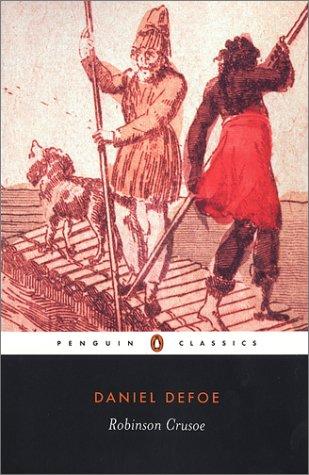
Robinson Crusoe is the fictional memoir of an Englishman shipwrecked on a deserted tropical island for twenty-eight years.
Daniel Defoe · 1719 · 8h 0m
Full summary and key takeaways →The 12 questions
- 1.
Crusoe's relationship with Friday is presented as benevolent paternalism. How do you read it? Is there a way to engage with the survival narrative without endorsing the colonial framework?
- 2.
Defoe spent extraordinary detail on Crusoe's practical methods — building, farming, potting. Did you find this engaging or tedious? What does it do for the novel's realism?
- 3.
Crusoe interprets everything that happens to him as God's providence. Does this framing feel genuine, convenient, or both?
- 4.
The novel is often cited as the origin of the bourgeois novel — the story of an individual using labor to master his environment. What assumptions about value and civilization does that origin embed?
- 5.
J.M. Coetzee's novel Foe retells Robinson Crusoe with Friday as a man whose tongue has been cut out — unable to tell his own story. Does knowing that rewriting change how you read Defoe?
- 6.
What would this novel look like if it were told from Friday's perspective?
- 7.
The novel was a bestseller in 1719 and is still in print. What accounts for its durability? Is it the survival story, the ideology, or the prose?
- 8.
Crusoe has a wife and children in England, whom he effectively forgets for most of the novel. What does this tell us about what the novel actually values?
- 9.
The survival narrative (The Martian, Cast Away, Lord of the Flies) is one of the most persistent story templates in Western culture. What need does it serve?
- 10.
Crusoe's island fantasy is about self-sufficiency without dependence. How does that fantasy land in an era of global supply chains and interdependence?
- 11.
Is Robinson Crusoe a hero, a prototype, or an argument? What is Defoe actually celebrating?
- 12.
How much does knowing this is 'the first novel' change how you read it? Does historical significance make it more or less interesting?
How to run the discussion
- Pick six to eight, not all of them. An hour of real discussion covers fewer questions than anyone expects, and racing the list is what makes a book club feel like homework.
- Open with what people noticed, not what they concluded. Asking for a verdict first hardens opinions before anyone has heard each other.
- Let the disagreement run. The questions below that split a room are the ones worth the time; the ones everyone answers the same way can be skipped.
- Ask the quiet person a specific question. A direct, narrow question is far easier to answer than an open invitation to contribute.
Themes worth steering toward
If the conversation stalls, these are the threads that usually restart it.
Common questions
What are good book club questions for Robinson Crusoe?
Here are 12 book club questions for Robinson Crusoe by Daniel Defoe, ordered to open easily and end somewhere worth arguing about. The strongest openers ask what each reader noticed rather than what they concluded, and the discussion usually turns on survival and self-reliance, colonialism and race, providence and faith.
How long should a book club discussion of Robinson Crusoe last?
Most groups run 60 to 90 minutes of actual discussion. That is roughly six to eight questions, not all of them, so pick the ones that suit your group rather than working down the list in order.
What are the main themes in Robinson Crusoe?
Survival and self-reliance, Colonialism and race, Providence and faith, Labor and civilization, Isolation. Those are the threads most likely to divide a room, which makes them the useful places to steer a discussion that has gone quiet.
Picking the next one? See books like Robinson Crusoe or questions for other book club picks.
