Rules of Civility by Amor Towles is a 2011 literary fiction book about class and ambition, reinvention, new york in the 1930s. Katey Kontent observes more than she acts, and Towles uses that quality deliberately: the novel is partly about what it costs a smart woman in 1938 to be a spectator rather than a participant.
Summary
Rules of Civility opens in 1966, when Katey Kontent — now in her early forties — encounters a series of photographs at a gallery show. The photos are of New York in 1938, and one of them shows a young man she once knew. This frame device unlocks the novel's central year: 1938, when twenty-five-year-old Katey, a typist of modest means, rings in New Year's Eve at a Greenwich Village jazz bar and meets Tinker Grey, a blue-blooded banker with the kind of ease that comes from generations of money. What follows is a portrait of New York's social geography that year — its jazz clubs, its newspapers, its apartments and townhouses — and the question of whether a woman of Katey's intelligence and drive can navigate it on her own terms.
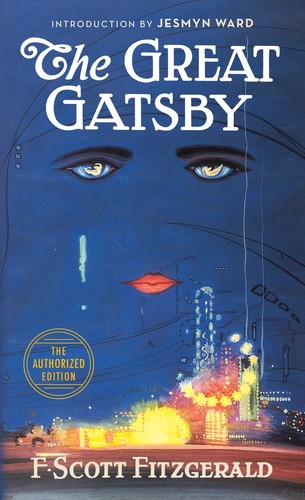
Towles is writing a novel about aspiration, but he has the good sense to give Katey aspirations worth having: she wants to read, to think, to belong to the world she's been born adjacent to. She is not scheming in the way of literary social climbers; she is observing, learning, and choosing — and what she chooses is not always what the reader expects. The novel's closest analog is The Great Gatsby: a first-person narrator from modest circumstances watching wealthy, attractive people move through their world and trying to decide what to make of it. But Katey is sharper than Nick Carraway and the novel is less elegiac, more sardonic.
The prose is the book's main event. Towles writes with an elegance that is clearly conscious and occasionally borders on self-display, but the period recreation is done with genuine craft — the right details, the right names, the right sense of how a world looked before the war would change everything. The title comes from George Washington's Rules of Civility and Decent Behaviour, a list of social codes the novel uses as an ironic counterpoint to the various ways its characters improvise their own codes.
For a debut novel, the ambition is impressive and mostly realized. Some of the plot mechanics in the second half feel convenient, and Tinker's resolution is too easily handled. But Katey Kontent is one of the more memorable narrators in recent American fiction — a woman who has made herself out of attention and language and will not be defined by either her origins or her romantic choices.

Talk to Rules of Civility like its author wrote you back.
Get the ideas that fit your life — not generic summaries.
- Chat with the book
- Audiobook-style main ideas
- Adapts to your life and goals
- Helps you take action
Key takeaways
- 1.
Katey Kontent observes more than she acts, and Towles uses that quality deliberately: the novel is partly about what it costs a smart woman in 1938 to be a spectator rather than a participant.
- 2.
Class in the novel is not just about money but about the unspoken codes — the rules of civility — that determine who belongs where, and Katey's project is to learn those codes without being captured by them.
- 3.
Tinker Grey is presented as an object of fascination before he becomes a person; the novel's slow reveal of who he actually is, versus who he appears to be, is its central structural move.
- 4.
The 1938 setting is used precisely — the shadow of the Depression is still present, Europe is about to break, and the glamour Katey moves through is explicitly temporary.
- 5.
New York as character: Towles maps the city's social geography with enough specificity that the novel doubles as a portrait of a moment in American urban life that no longer exists.
- 6.
The frame device (Katey in 1966 looking back) adds a retrospective weight to the story — she survived and built her own life, which changes what the 1938 choices mean.
- 7.
The title's irony is central: George Washington's civility codes were about behavior, but the novel's characters use similar surface codes to hide their actual motives and origins.
- 8.
Female ambition in 1938 required women to pursue what they wanted sideways — through observation, through writing, through relationships — and the novel honors that indirection without romanticizing it.
Discussion questions
Use these on your own, with a book club, or as chat starters in Superbook. Book club version, ready to copy or print →
- 1.
Katey says she is not interested in becoming like the people she observes. By the novel's end, do you believe her? Has she become them?
- 2.
Tinker is presented as the most attractive character in the novel's first half. When did your reading of him begin to shift, and what caused that shift?
- 3.
The novel is set entirely in 1938 but framed from 1966. What does that retrospective distance add? Would the novel work told in present tense?
- 4.
Katey's friend Eve makes different choices and different compromises. Is the novel fair to Eve, or does it judge her for not being Katey?
- 5.
Rules of Civility is clearly in conversation with The Great Gatsby — first-person narrator, wealthy characters, 1930s New York, a romance that ends without delivering on its promise. Is the conversation fruitful or is Towles just imitating a better book?
- 6.
The title refers to George Washington's behavioral codes. Where does the novel use or invert those codes most pointedly?
- 7.
Katey is a typist who reads and thinks her way into a better life. Is her trajectory realistic for 1938, or is the novel romanticizing the meritocratic possibilities of mid-century New York?
- 8.
Several characters reinvent themselves — new names, new histories, new identities. Does the novel celebrate reinvention or treat it as a form of deception?
- 9.
Which character in the novel would you say has the most authentic life? Is authenticity something the novel values?
- 10.
The prose in Rules of Civility is quite elegant. Does that elegance serve the story, or does it sometimes feel like Towles is more interested in his sentences than in his characters?
- 11.
By the time Katey sees Tinker's photograph in 1966, how do you think she feels about that year? Regret, nostalgia, relief, something else?
- 12.
Compared to The Lincoln Highway, which Towles wrote a decade later, Rules of Civility is smaller and more controlled. Which Towles do you find more satisfying?
Themes
Frequently asked questions
-
Is Rules of Civility worth reading if I loved A Gentleman in Moscow?
Yes, though manage your expectations. Rules of Civility is a more conventional novel — set in New York rather than confined to a single building, and more plot-dependent. It has the same elegant prose and period immersion but less of the formal ingenuity. Most Towles fans enjoy it as a companion piece.
-
What is Rules of Civility about?
A smart young woman of modest means navigating New York's social world in 1938 after a chance New Year's Eve encounter with a wealthy banker. It is about class, ambition, female independence, and the rules — spoken and unspoken — that govern who gets to belong where.
-
How does Rules of Civility compare to The Great Gatsby?
Both are set in New York, use a first-person narrator watching wealthy people from a slight remove, and end with the wealthy characters failing to deliver on their promise. Katey is a sharper, more active narrator than Nick Carraway, and Towles is more interested in what women can build than in elegizing what men lose.
-
Is Rules of Civility a romance?
It has romantic elements, but it resists being reduced to one. The love story is less important than Katey's project of making herself — the romance is one lens through which that project becomes visible, not the point of the novel.
-
Who shouldn't read Rules of Civility?
Readers who find period elegance irritating or who want plot-driven fiction. The novel is deliberately atmospheric and character-focused; if you need things to happen at a fast clip, this one will frustrate you.