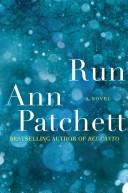
Talk to Run like its author wrote you back.
Get the ideas that fit your life — not generic summaries.
- Chat with the book
- Audiobook-style main ideas
- Adapts to your life and goals
- Helps you take action
Run, in detail
Run is set over the course of a single night in Boston, threading through the lives of the Doyle family — Bernard Doyle, a former mayor and widower, and his two adopted Black sons, Tip and Teddy. The novel opens after a political rally, when a woman is hit by a car while pushing Tip out of the way. In the hours that follow, the family and the injured woman's young daughter, Kenya, are drawn together in ways that clarify what the Doyles have been to each other and what they have refused to see.
Patchett is writing about a specific kind of well-intentioned white liberal family — one that adopted children of color out of genuine love and also, the novel gently insists, out of something less examined. Bernard Doyle wanted sons who would be athletes and politicians, heirs to a particular tradition. His sons have become a biologist and a man studying for the priesthood. The gap between who children are supposed to be and who they actually are is the engine of the novel's tension, expressed with Patchett's characteristic patience rather than confrontation.
The novel's structure — a single compressed night, years of backstory folded in — keeps the pressure high while allowing for the kind of retroactive understanding that Patchett does well. Kenya, who appears initially as a child needing help, turns out to be the figure who can see the Doyle family clearly because she is both inside and outside it. The backstory of her mother June and her connection to the Doyles carries the novel's most unexpected emotional weight.
Run is less celebrated than Bel Canto but makes some readers love it even more because of how precisely it works. It's not a comfortable novel about race — it asks whether good intentions are the same as good actions, whether adoption is love or acquisition, and whether the children we raise are ever really ours. For a book set in a single night, it carries an enormous amount of quiet moral ambition.
The big ideas
- 1.
Bernard's love for his sons is genuine and real, but the novel shows how love can coexist with projection and an unwillingness to see who someone actually is.
- 2.
Tip and Teddy's Blackness is never incidental — the novel is acutely aware of what it means to be Black sons in a prominent white political family in Boston.
- 3.
Kenya is the novel's most penetrating observer: as an outsider-insider, she can see the Doyle family from an angle none of them can.
