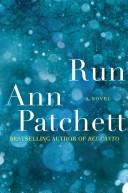
Run by Ann Patchett is a 2007 literary fiction book about family and obligation, race and privilege, parenthood. Bernard's love for his sons is genuine and real, but the novel shows how love can coexist with projection and an unwillingness to see who someone actually is.
Summary
Run is set over the course of a single night in Boston, threading through the lives of the Doyle family — Bernard Doyle, a former mayor and widower, and his two adopted Black sons, Tip and Teddy. The novel opens after a political rally, when a woman is hit by a car while pushing Tip out of the way. In the hours that follow, the family and the injured woman's young daughter, Kenya, are drawn together in ways that clarify what the Doyles have been to each other and what they have refused to see.
Patchett is writing about a specific kind of well-intentioned white liberal family — one that adopted children of color out of genuine love and also, the novel gently insists, out of something less examined. Bernard Doyle wanted sons who would be athletes and politicians, heirs to a particular tradition. His sons have become a biologist and a man studying for the priesthood. The gap between who children are supposed to be and who they actually are is the engine of the novel's tension, expressed with Patchett's characteristic patience rather than confrontation.
The novel's structure — a single compressed night, years of backstory folded in — keeps the pressure high while allowing for the kind of retroactive understanding that Patchett does well. Kenya, who appears initially as a child needing help, turns out to be the figure who can see the Doyle family clearly because she is both inside and outside it. The backstory of her mother June and her connection to the Doyles carries the novel's most unexpected emotional weight.
Run is less celebrated than Bel Canto but makes some readers love it even more because of how precisely it works. It's not a comfortable novel about race — it asks whether good intentions are the same as good actions, whether adoption is love or acquisition, and whether the children we raise are ever really ours. For a book set in a single night, it carries an enormous amount of quiet moral ambition.
Talk to Run like its author wrote you back.
Get the ideas that fit your life — not generic summaries.
- Chat with the book
- Audiobook-style main ideas
- Adapts to your life and goals
- Helps you take action
Key takeaways
- 1.
Bernard's love for his sons is genuine and real, but the novel shows how love can coexist with projection and an unwillingness to see who someone actually is.
- 2.
Tip and Teddy's Blackness is never incidental — the novel is acutely aware of what it means to be Black sons in a prominent white political family in Boston.
- 3.
Kenya is the novel's most penetrating observer: as an outsider-insider, she can see the Doyle family from an angle none of them can.
- 4.
The single-night structure creates compression that forces characters to be their most essential selves — there is no time for evasion.
- 5.
June's backstory reframes the entire Doyle family narrative: what looks like rescue from one angle looks different from another.
- 6.
Patchett asks whether good adoption, done with love, can still enact a kind of violence — the erasure of one inheritance and the imposition of another.
- 7.
The title 'Run' operates on multiple levels: the running that defines Kenya, the running Tip and Teddy are meant to do politically, and the flight everyone keeps attempting from the truth.
- 8.
The novel refuses resolution on its hardest questions. The Doyles are not condemned or redeemed; they are simply shown clearly, and that clarity is the reader's to work with.
Discussion questions
Use these on your own, with a book club, or as chat starters in Superbook. Book club version, ready to copy or print →
- 1.
Bernard Doyle loved his sons, pushed them toward careers they didn't want, and may have taken them from a mother who could have raised them. How do you weigh those things against each other?
- 2.
Tip wants to be a biologist; Teddy wants the priesthood. Neither is what Bernard wanted. How does the novel treat the gap between a parent's vision and a child's actual life?
- 3.
Kenya's mother June made a sacrifice. Was it the right one? Does the novel let you decide, or does it nudge you toward an answer?
- 4.
The Doyle family is politically prominent, racially conscious, and genuinely loving — and also, the novel suggests, limited in its ability to see clearly. Is that a realistic portrait of a certain kind of liberalism?
- 5.
What does Boston as a setting add to this story? Could it be set anywhere, or is the city's specific history with race part of the argument?
- 6.
The novel takes place in a single night but covers years of history. How does that structure affect the emotional impact?
- 7.
Patchett is a white author writing about a Black family and the experience of Black children in a white household. Does she handle that material with enough self-awareness?
- 8.
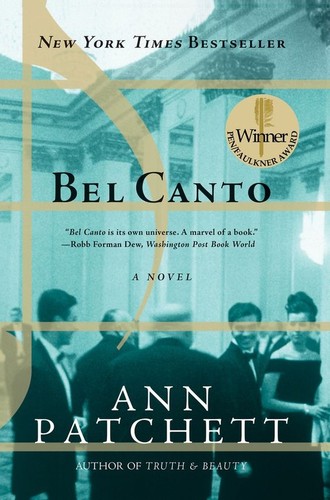
How does Run compare to Bel Canto as a novel about family and love? What does Patchett do differently when she's writing in a more realistic register?
- 9.
Kenya is ten years old and sees more than any of the adults. Is that characterization convincing, or does it feel like a literary device?
- 10.
By the end of the novel, what has changed for the Doyle family? Is it transformation, or just clearer sight?
- 11.
What does the novel think adoption is? Is it love, obligation, acquisition, rescue — or some unstable combination?
- 12.
Bernard's wife Bernadette is present only in memory. How does her absence shape the family we see?
Themes
Frequently asked questions
-
Is Run as good as Bel Canto?
Different. Bel Canto is more lyrical and operatic; Run is quieter and more uncomfortable. Some readers prefer Run precisely because it asks harder questions more directly. If you want Patchett at her most emotionally devastating, Bel Canto. If you want her at her most morally searching, Run.
-
What is Run about, without spoilers?
A Boston family — a white ex-mayor and his two adopted Black sons — spend a single night being forced to reckon with what they are to each other, after a stranger's act of sacrifice pulls them into her daughter's orbit. It's about parenthood, race, ambition, and the difference between loving someone and seeing them clearly.
-
Is Run a comfortable read?
No. It asks genuinely hard questions about adoption, race, and good intentions that it refuses to resolve neatly. Patchett doesn't write didactic fiction — she observes, very precisely, and leaves you to sit with what you've seen.
-
Who shouldn't read Run?
Readers who want plot-driven fiction with clear resolution and satisfying answers. Run is interior, compressed, and deliberately open-ended. Its rewards are quiet and accumulative rather than dramatic.
-
How long does Run take to read?
Around five hours at average pace. The novel is 295 pages and reads quickly because the single-night structure keeps momentum going. The backstory sections slow things briefly, but the compression generally pulls you forward.