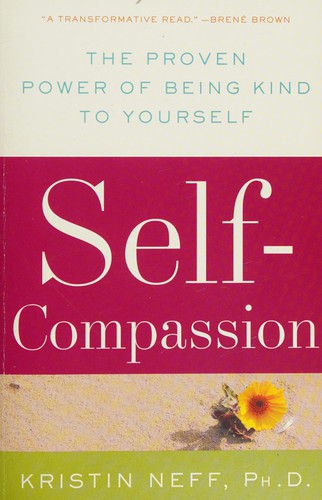
Talk to Self-Compassion: The Proven Power of Being Kind to Yourself like its author wrote you back.
Get the ideas that fit your life — not generic summaries.
- Chat with the book
- Audiobook-style main ideas
- Adapts to your life and goals
- Helps you take action
What it argues
Kristin Neff makes a claim that many readers initially resist: treating yourself with the same kindness you'd offer a good friend in distress is not self-indulgence, weakness, or an obstacle to high performance. It is, according to her research, one of the most reliable predictors of psychological health, motivation, and resilience. Self-compassion is not the same as self-esteem, which depends on external validation and comparative evaluation. It is a stable inner orientation that doesn't require you to be special, right, or better than others in order to feel okay about yourself.
Neff defines self-compassion through three interlocking components. Self-kindness means treating yourself with warmth rather than harsh judgment when you fail or struggle. Common humanity means recognizing that imperfection, difficulty, and suffering are part of the shared human experience rather than signs of personal deficiency. Mindfulness means observing painful thoughts and feelings clearly rather than suppressing them or amplifying them into rumination. The three components interact: mindfulness makes the suffering visible, common humanity prevents isolation, and self-kindness provides the care.
What it gets right
- 1.
Self-compassion has three components: self-kindness, common humanity, and mindfulness. Each is necessary; none is sufficient alone.
- 2.
Self-compassion is not the same as self-esteem. Self-esteem requires comparison and evaluation; self-compassion is unconditional and doesn't depend on performance or status.
- 3.
The inner critic is usually a fear-management strategy, not a motivational tool. It tends to increase anxiety and avoidance rather than performance.
What it covers
Who wrote it
Kristin Neff is an associate professor in the department of educational psychology at the University of Texas at Austin. She is one of the leading researchers in the field of self-compassion and developed the Self-Compassion Scale, the most widely used measure of self-compassion in psychological research. Together with clinical psychologist Christopher Germer she created the Mindful Self-Compassion training program. Her research appears in journals including Emotion, Motivation and Emotion, and the Journal of Personality and Social Psychology.
